

Irish
- noun
- /ˈaɪrɪʃ/
- And the lyrics was sung both in English and Irish by Lisa Hannigan.
Loading YouTube…
Watch on YouTubeListen, the Irish, that's an attractive language.
- Listen, the Irish, that's an attractive language.
- So he had like a little sock on his lad, as we'd say in our his lad it would be the Irish for yes upon us.
Examples
-
But also at school, of course, as we were learning Irish, we learned predominantly through song.
-
We get a lot of users on Saint Patrick's Day learning Irish for one day.
-
A hot press is, is the Irish word for what the English would call an airing cupboard.
-
In her class, she studied Irish to connect with her heritage and better understand her ancestors.
-
The children's book was written in both English and Irish to help promote the language.
-
During the festivals, many locals gathered to celebrate the revival of Irish language traditions.
Synonyms

 4
9.3
4
9.3

A language from the Celtic family spoken in Scotland or Ireland

 1
8.6
1
8.6
A traditional language of Ireland, often called Irish
 1
6.0
1
6.0
A Celtic language that people speak in Ireland, also called Gaeilge
A Celtic language spoken in Ireland and Scotland, for example Irish or Scottish Gaelic
Compounds
 8
6.7
8
6.7
A group of people who use violence to try to end British rule in Northern Ireland and unite Ireland

 3
3.5
3
3.5
A country of 26 of Ireland's 32 counties that became independent from the United Kingdom in 1921




 1
6.1
1
6.1
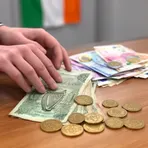
A time in Ireland from 1845 to 1852 when a potato disease made many people starve and leave the country


 1
9.9
1
9.9
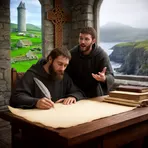
The earliest form of Irish written and spoken in Ireland and Scotland from the 6th to the 12th centuries
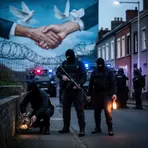
A group that uses violence to oppose the Northern Ireland peace process

An armed group that split from the Provisional IRA in 1997 and uses violence against the Northern Ireland peace process

A form of the Irish language used in speech and writing from about 1100 to 1500


- Irish
A way people write English words in Ireland using British forms like colour


A way of spelling English used in Ireland that is similar to British spelling but with some Irish differences
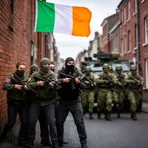
A group that uses violence to remove British soldiers from Northern Ireland and unite Ireland


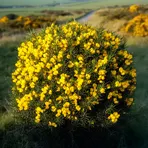
A small evergreen tree with bright red berries that you can eat but are not very sweet

A large dog with a curly brown coat and a nearly hairless tail that fetches things from water


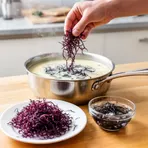
A round loaf made with baking soda and buttermilk, often with raisins or caraway seeds


An armed Irish group that used violence to end British rule in Northern Ireland
- Offensive
A small armed Irish group that uses bombs and guns to oppose peace talks

An early form of Irish spoken and written in Ireland until about the year 1100
Surface Forms
Etymology
Irish for the language comes from the same name Éire, meaning 'Ireland', so it simply means the speech of the people of Ireland and the native language there.