
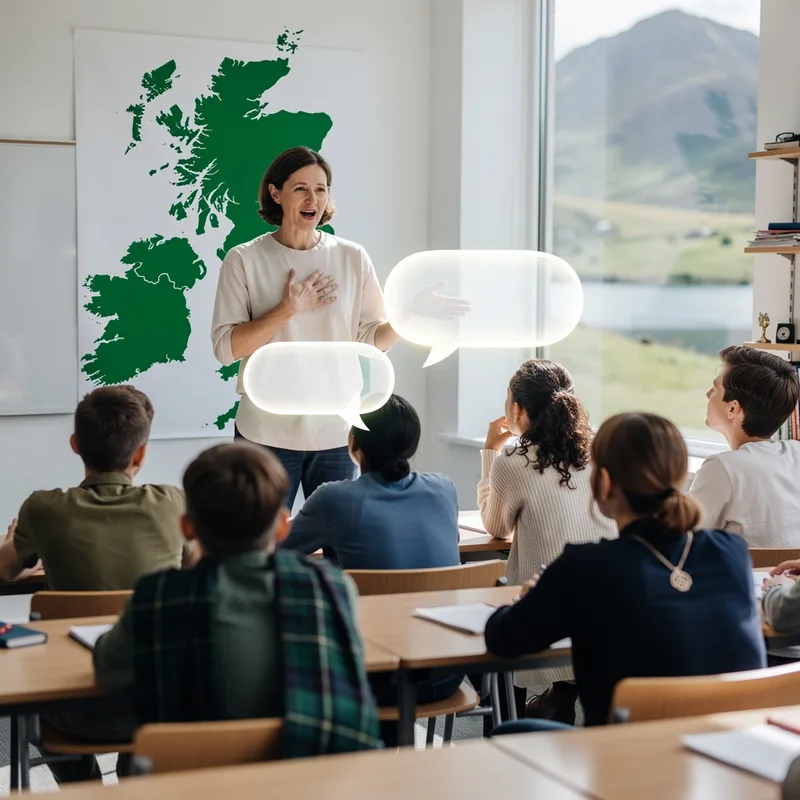
Gaelic
 4
9.3
4
9.3

- noun
- /ˈɡeɪlɪk/
- In Ireland, many people are proud to speak Gaelic as part of their cultural heritage.
- English and Gaelic
Loading YouTube…
Watch on YouTubeSo I, I don't speak Gaelic but I do have a very Irish name.
- So I, I don't speak Gaelic but I do have a very Irish name.
Examples
-
One door was marked 'FIR,' the Gaelic for Men, and the other 'MNA,' for Women.
Fiction book (1994) -
Does anyone speak Gaelic?
-
Teach me some Gaelic then.
-
Must have been in Gaelic.
-
There was a short speech next, given in Gaelic.
Fiction book (1991) -
I was slowly learning to put a few words of Gaelic together, though I could in no way be said to understand the language yet.
Fiction book (1991) -
Of course, the proceedings had all been held in Gaelic, I argued with myself.
Fiction book (1991) -
That's just a little sample of what the Gaelic tongue is like in our country.
-
Do you speak Gaelic?
-
Hardly anyone spoke with a burr; fewer still knew more than a smattering of Gaelic.
Fiction book (2001)
Synonyms

 1
8.6
1
8.6
A traditional language of Ireland, often called Irish
 1
6.0
1
6.0
A Celtic language that people speak in Ireland, also called Gaeilge
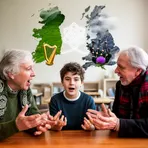
A Celtic language spoken in Ireland and Scotland, for example Irish or Scottish Gaelic
A group of Celtic languages like Irish, Scottish Gaelic, and Manx spoken in Ireland, Scotland, and the Isle of Man
A group of Celtic languages including Irish, Scottish Gaelic, and Manx spoken in Ireland, Scotland, and the Isle of Man
A name for the Gaelic languages of Ireland and Scotland
A Gaelic language spoken in Scotland and Ireland, especially Scottish Gaelic
A Celtic language spoken in Scotland similar to Irish and Manx
A Celtic language spoken in Scotland, mainly in the Highlands and islands, different from Irish Gaelic

A Gaelic language spoken in Scotland that is different from Irish

A traditional language spoken in Ireland
Compounds
A Celtic language spoken in Ireland and Scotland, for example Irish or Scottish Gaelic
A Celtic language spoken in Scotland, mainly in the Highlands and islands, different from Irish Gaelic
Surface Forms
Etymology
Gaelic names the languages of the Gaels, such as Irish and Scottish Gaelic, and the word comes from an old Irish term meaning 'people of Ireland and Scotland'. So when someone speaks Gaelic, they speak the traditional language of those people.