
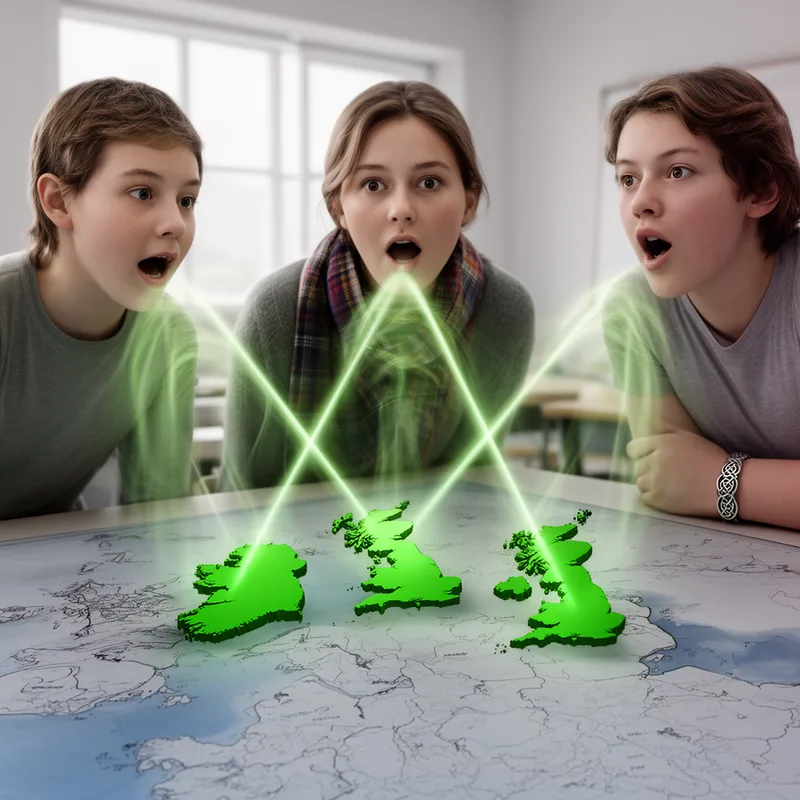
Goidelic
- noun
- /ˈɡoʊɪdɛlɪk/
- Specialized
- The Goidelic languages include Irish, Scottish Gaelic, and Manx.
Examples
-
The Goidelic languages are distinct from the Brythonic branch spoken in Wales and Brittany.
-
Manx, though once extinct, has been revived as part of the Goidelic family.
-
Irish and Scottish Gaelic both belong to the Goidelic language group.
-
The Goidelic languages include Irish and Scottish Gaelic.
-
Many people in Ireland speak Goidelic languages.
-
Irish and Scottish Gaelic both belong to the Goidelic language group.
-
Manx, though once extinct, has been revived as part of the Goidelic family.
Synonyms

A group of Celtic languages like Irish, Scottish Gaelic, and Manx spoken in Ireland, Scotland, and the Isle of Man

A name for the Gaelic languages of Ireland and Scotland
Compounds
- Specialized
A group of Celtic languages like Irish, Scottish Gaelic, and Manx spoken in Ireland, Scotland, and the Isle of Man
Surface Forms
Morphology
Goidelic = Goidel (semi-transparent) = Goidel + ic
Formed regularly as 'Goidel' + '-ic' but the base 'Goidel' is a specialized ethnonym unfamiliar to most learners, so the relation is only partly helpful for general vocabulary prediction.
Etymology
Goidelic comes from the old name for the Gael, the people who spoke Gaelic in Ireland, Scotland and the Isle of Man. So Goidelic means 'of the Gaels', which is why it names the family of Irish, Scottish Gaelic and Manx languages.

