
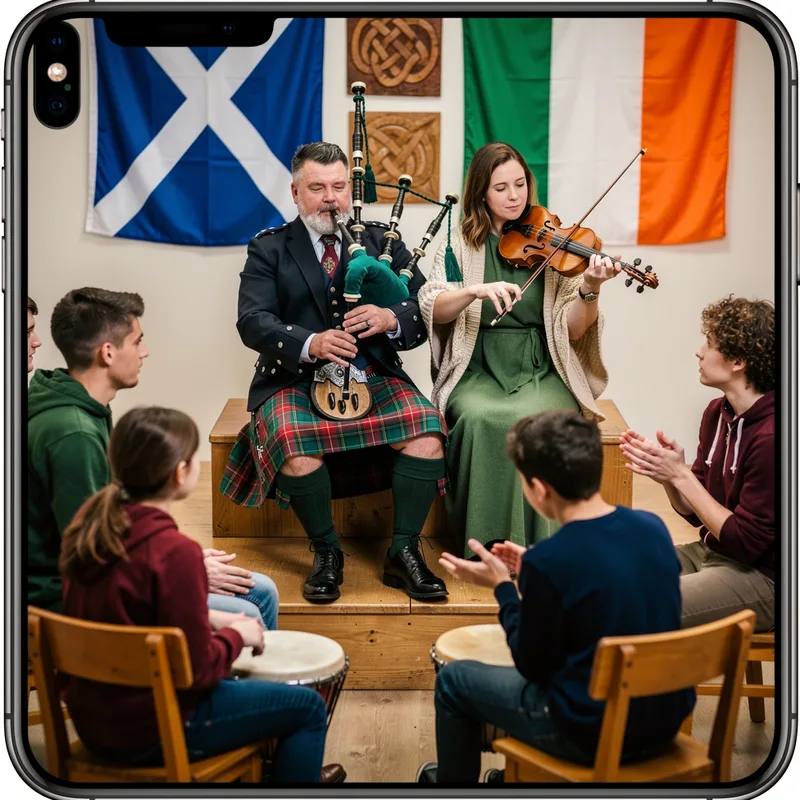
Gaelic
 6
7.7
6
7.7

- adjective
- /ˈɡeɪlɪk/
- By this time, large colonies of Gaelic-speaking Irish were visible in the impoverished Point and Skunk Hollow districts.
- Scottish Gaelic
- Irish Gaelic
- Gaelic language
Loading YouTube…
Watch on YouTubeConan is an old Gaelic name that my parents gave me.
- Conan is an old Gaelic name that my parents gave me.
Examples
-
But I'd pay just about any amount of money to watch an international Gaelic football tournament.
Blog text (18) -
Between them, these two books represent the most complete collection of Irish Gaelic songs available.
Blog text (15) -
But the Gaelic people in Ireland did not speak English at all.
-
It's a Gaelic musical competition.
-
This is a Gaelic-speaking region.
-
The All-Ireland Gaelic football final was coming up, he told her.
Fiction book (1998) -
The name is Irish and of Gaelic origin; it means "dream-vision" or "vision-poem."
Blog text (13) -
I am grateful to Irish language scholar Eamonn Donaill for his help in understanding the Gaelic connotations of the phrase.
Academic text (2014) -
Non-American sports like soccer, cricket, hurling, Gaelic football, and gymnastics preserved and reinforced ethnic cultural solidarity.
Academic text (1993) -
Every year, the town hosts a festival that celebrates its rich Gaelic traditions.
Synonyms
Able to speak Gaelic
Compounds




A Celtic language spoken in Ireland and Scotland, for example Irish or Scottish Gaelic


A Celtic language spoken in Scotland, mainly in the Highlands and islands, different from Irish Gaelic
Surface Forms
Morphology
Etymology
Gaelic comes from the name of the people, the Gaels, and from an old Irish word for them meaning 'people of Ireland and Scotland'. So something called Gaelic is linked to the Gaels' language, culture, or traditions.