
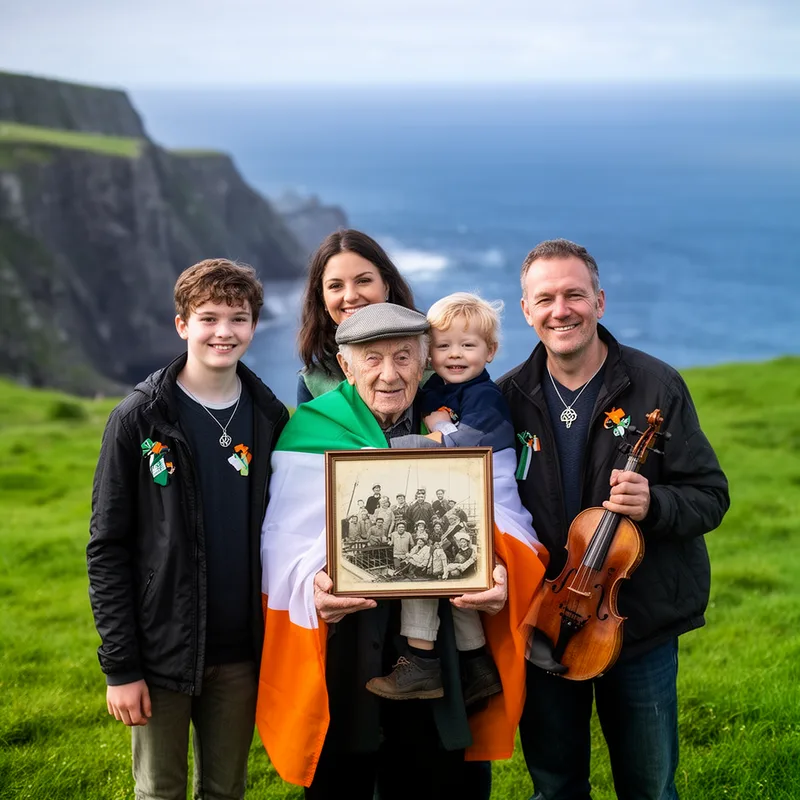
Irish


 1
1.0
1
1.0
- noun
- /ˈaɪrɪʃ/
- She is regarded as the first major woman poet in the Irish poetic tradition.
Loading YouTube…
Watch on YouTubeLike my grand, my grandparents are Scottish, Irish, Welsh, German, right?
- Like my grand, my grandparents are Scottish, Irish, Welsh, German, right?
- I think whoever told you don't trust the Irish was spot on.
- Apparently the luck of the Irish did not strike Joe.
- Well, first of all, I have to admit proudly that I'm Irish and Irish have tempers.
- So suddenly the Fighting Irish are now the social distanced Irish.
Examples
-
And they are the Irish, the Irish.
-
And then I knew that the Irish center had meetings, right.
-
Because she is one of the Irish you haven't heard speaking.
-
Well, first of all, I have to admit proudly that I'm Irish and Irish have tempers.
-
Lily Yates, the sister of the Irish poet WB Yates, wrote to her brother.
-
Many famous writers, such as James Joyce and W.B. Yeats, are celebrated members of the Irish literary tradition.
-
At the festival, you could taste traditional dishes and enjoy music from the Irish culture.
-
During the parade, thousands of Irish people gathered to celebrate their heritage with pride.
Synonyms

People who live in Ireland or have family from Ireland
Compounds
 8
6.7
8
6.7
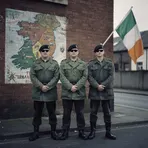
A group of people who use violence to try to end British rule in Northern Ireland and unite Ireland

 3
3.5
3
3.5
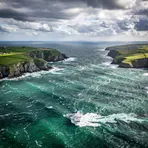
A country of 26 of Ireland's 32 counties that became independent from the United Kingdom in 1921



 1
6.1
1
6.1
A time in Ireland from 1845 to 1852 when a potato disease made many people starve and leave the country


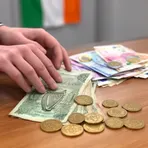
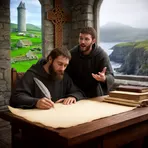 1
9.9
1
9.9
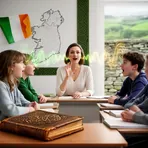
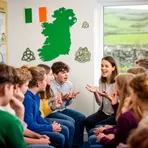
The earliest form of Irish written and spoken in Ireland and Scotland from the 6th to the 12th centuries
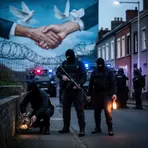
A group that uses violence to oppose the Northern Ireland peace process

An armed group that split from the Provisional IRA in 1997 and uses violence against the Northern Ireland peace process

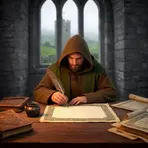
A form of the Irish language used in speech and writing from about 1100 to 1500

- Irish
A way people write English words in Ireland using British forms like colour


A way of spelling English used in Ireland that is similar to British spelling but with some Irish differences
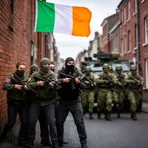
A group that uses violence to remove British soldiers from Northern Ireland and unite Ireland


A small evergreen tree with bright red berries that you can eat but are not very sweet

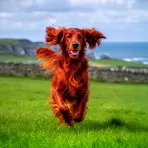
A large dog with a curly brown coat and a nearly hairless tail that fetches things from water


A round loaf made with baking soda and buttermilk, often with raisins or caraway seeds


An armed Irish group that used violence to end British rule in Northern Ireland
- Offensive
A small armed Irish group that uses bombs and guns to oppose peace talks

An early form of Irish spoken and written in Ireland until about the year 1100
Surface Forms
Etymology
Irish comes from the Irish name Éire for the island, so it literally means 'from Ireland' and is used for the people who come from there.