

Chinese mustard
- noun
- /ˈtʃaɪniːz ˈmʌstərd/
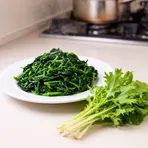
- You can stir-fry Chinese mustard with garlic for a quick and healthy side dish.
Examples
-
At the market, she chose fresh Chinese mustard to add to her noodle recipe.
-
I love adding Chinese mustard to my salads.
-
The spicy flavor of Chinese mustard enhances many traditional Asian soups and stews.
-
Have you tried Chinese mustard in your stir-fry?
-
At the market, she chose fresh Chinese mustard to add to her noodle recipe.
-
The spicy flavor of Chinese mustard enhances many traditional Asian soups and stews.
-
You can stir-fry Chinese mustard with garlic for a quick and healthy side dish.
Synonyms
 2
3.6
2
3.6

Leaves from a mustard plant that people eat cooked

A leafy green vegetable with thick slightly bitter leaves used in Chinese cooking

A green leafy vegetable with spicy leaves used in cooking

A plant in the mustard family grown for spicy leaves and seeds

A leafy plant with leaves eaten as greens and seeds used as a spice and for oil

A leafy Asian plant with a swollen root crown that you can eat raw or cooked

A common field weed with yellow flowers and edible leaves
How Peppery

Surface Forms
Morphology
The phrase is a simple adjective+noun composition meaning a type or variety of mustard associated with China, so a B1 learner who knows 'Chinese' and 'mustard' can infer it denotes mustard of Chinese origin or style. There may be minor ambiguity between the condiment sense and the leafy greens, but the overall meaning is compositionally derivable and follows a common cross-linguistic pattern.
Etymology
Chinese mustard is the leafy mustard plant from Asia with spicy leaves that people stir-fry or add to soups, so the name refers to a 'vegetable' used to add strong flavor.