
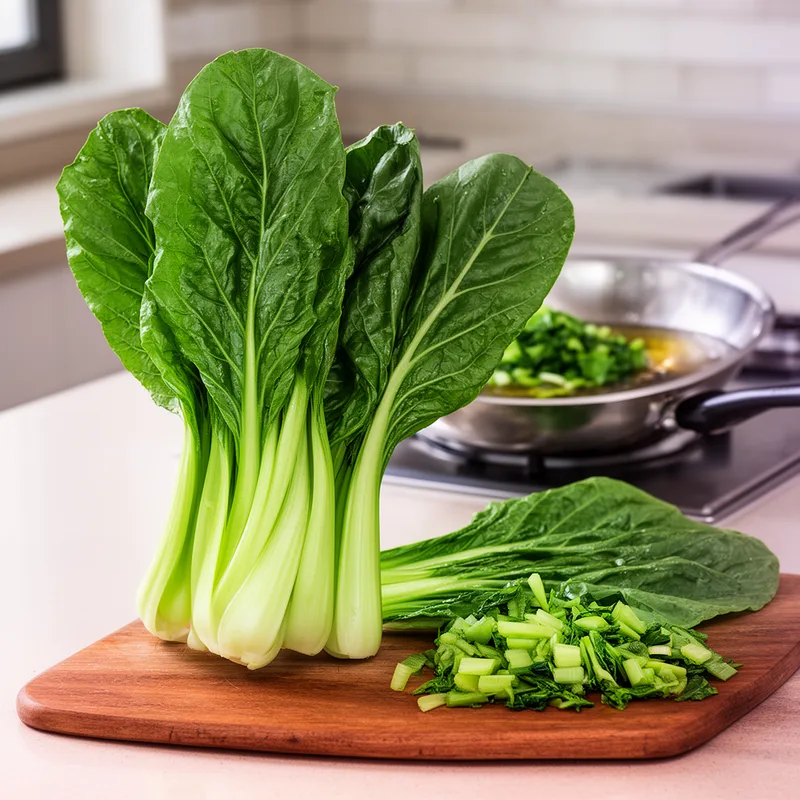
gai choi
- noun
- UK
- You can stir-fry gai choi with garlic for a quick and healthy side dish.
Examples
-
Pickled gai choi is a staple ingredient in many traditional Chinese soups.
-
My grandmother always added gai choi to her noodle dishes for extra flavor.
-
I love adding gai choi to my stir-fry.
-
Have you tried gai choi in your salad?
-
My grandmother always added gai choi to her noodle dishes for extra flavor.
-
Pickled gai choi is a staple ingredient in many traditional Chinese soups.
-
You can stir-fry gai choi with garlic for a quick and healthy side dish.
Synonyms

 12
2.0
12
2.0

Leaves from a plant like cabbage that are cooked and eaten as greens
 2
3.6
2
3.6
Leaves from a mustard plant that people eat cooked

A plant in the mustard family grown for spicy leaves and seeds

A green leafy vegetable with spicy leaves used in cooking

A leafy plant from Asia with spicy leaves used as a vegetable or seasoning

A leafy plant with leaves eaten as greens and seeds used as a spice and for oil
How Bitter

Surface Forms
Morphology
gai + choi
Both constituents 'gai' and 'choi' are not English dictionary items (no definitions provided) and the compound is a loanword for a specific Asian mustard green; a B1 learner who knows English vocabulary would not be able to derive this meaning from the parts. Even though the phrase is compositional in its source language (gai = mustard, choi = vegetable), that knowledge is unlikely for typical English learners, so the MWE functions as a lexicalized, non-transparent borrowing in English.
Etymology
Gai choi comes from Chinese words gai and choi, where gai means 'mustard' and choi means 'vegetable'. So the name simply means 'mustard vegetable', and that's why gai choi refers to the thick, slightly bitter mustard leaves used in soups, pickles, and stir-fries.