

Brassica juncea
- noun
- Specialized
- Many gardeners grow Brassica juncea for its nutritious and flavorful greens.
Examples
-
The spicy leaves of Brassica juncea are often stir-fried in Asian cuisine.
-
The seeds of Brassica juncea are also used to make a pungent mustard oil.
-
I love to eat Brassica juncea in my salads.
-
Have you tried Brassica juncea stir-fried with garlic?
-
Many gardeners grow Brassica juncea for its nutritious and flavorful greens.
-
The spicy leaves of Brassica juncea are often stir-fried in Asian cuisine.
-
I love to eat Brassica juncea in my salads.
Synonyms
 2
3.6
2
3.6

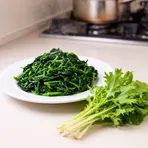
Leaves from a mustard plant that people eat cooked

A leafy plant with leaves eaten as greens and seeds used as a spice and for oil

A leafy green vegetable with thick slightly bitter leaves used in Chinese cooking

A green leafy vegetable with spicy leaves used in cooking
Surface Forms
Morphology
Brassica + juncea
This is a scientific Latin binomial (genus + specific epithet) rather than a compositional English phrase; the epithet 'juncea' is not a regular English word and provides no obvious cue to the common name or culinary use. Even if a learner knows 'Brassica' denotes a group of plants, they would not reliably infer the specific species meaning 'Indian mustard / mustard greens', so the overall meaning is not derivable from the parts.
Etymology
Brassica juncea gets its name from old Latin words: Brassica was used for cabbages and mustards, and juncea likely means 'rush-like', pointing to its long, thin stems. So the name is simply a label for the mustard plant we eat as spicy greens and use for its seeds.