
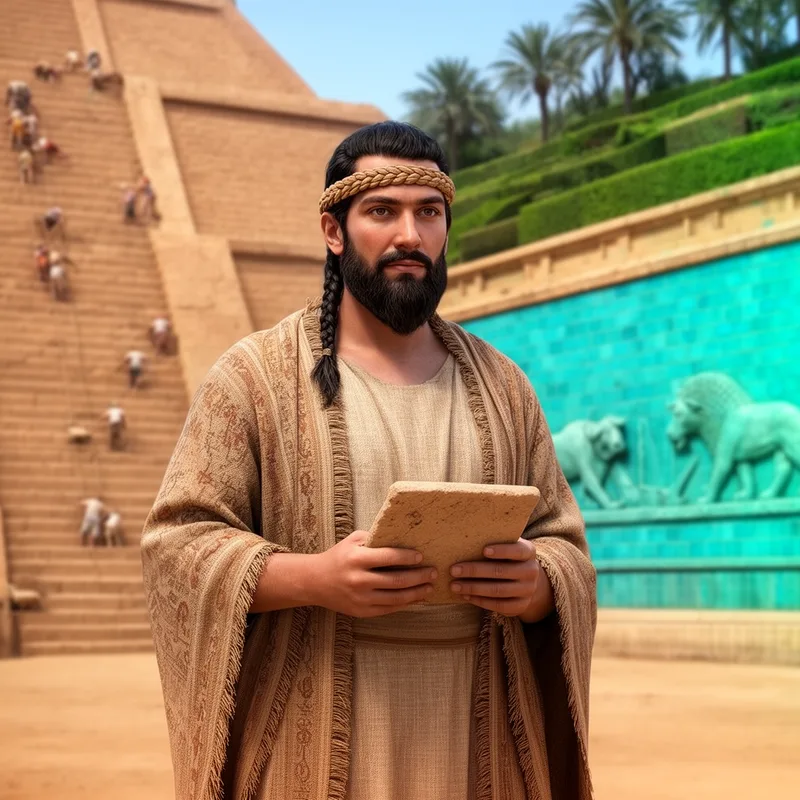
Babylonian
- noun
- /ˌbæbəˈloʊniən/
- The famous Code of Hammurabi was established by a Babylonian king to promote justice in society.
Loading YouTube…
Watch on YouTubeAnd what happened was King Cyrus the Persian, he came through and he destroyed the Babylonians.
- And what happened was King Cyrus the Persian, he came through and he destroyed the Babylonians.
- And the Babylonians have become accustomed to this.
- We have sleepless, possibly drug induced Greeks and Romans and Babylonians looking up into the night sky.
- They worship false gods, Egyptians, Babylonians, Romans, you name them, They're all not even in the running.
Examples
-
First came the Assyrians, then the Babylonians, then the Persians, who ruled the Jews with a reasonably fair and light hand.
-
The ancient Babylonians believed in a code of justice, an eye for an eye and a truth for a truth and a but for a but.
-
Thanks to the ancient Babylonians who painted the way for all of us.
-
And they are, for the Babylonians, places full of magic and full of mystery.
-
Ultimately, Tyre was able to beat back the Babylonians, but not without cost.
-
And the Babylonians have become accustomed to this.
-
And you know, the Babylonians, the ancient Egyptians, I don't know.
-
And the people came up with this are sleepless Babylonians, Romans and Greeks, right?
-
The Babylonians, Egyptians, Greeks, they all used sandals during the day and star clocks at night to mark the passing of time.
-
They worship false gods, Egyptians, Babylonians, Romans, you name them, They're all not even in the running.
Synonyms

 1
8.3
1
8.3

A person from the ancient region between the Tigris and Euphrates rivers
Compounds


 1
9.7
1
9.7
A time when the king of Babylon took many Jewish people from Israel to Babylonia after 586 BC

An ancient flat piece of clay from Babylon with wedge-shaped writing used to record laws, trade, or stories

A tree with long drooping branches and thin leaves often planted near ponds for shade
Surface Forms
Morphology
Etymology
Babylonian originally named someone from Babylon, from the old word Bāb-ilu meaning 'gate of God', so a Babylonian is a person who lived in or belonged to that ancient city.