
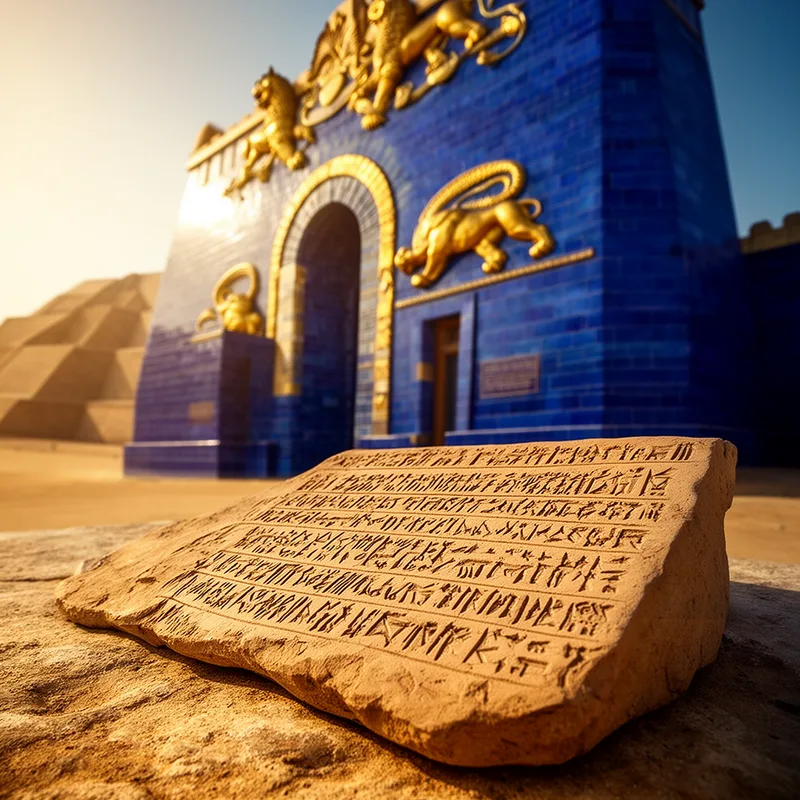
Babylonian
 12
7.7
12
7.7

- adjective
- /ˌbæbəˈloʊniən/
- Bel is the newer name of Marduk, the main Babylonian god.
- Babylonian culture
- Babylonian captivity
- Babylonian exile
Loading YouTube…
Watch on YouTubeSo the Anunnaki come from the Sumerian and Babylonian texts, which was those texts came from when?
- So the Anunnaki come from the Sumerian and Babylonian texts, which was those texts came from when?
- The Book of Laws has two versions, the Palestinian version at least the Jerusalem version and the Babylonian version.
- So in a sense, the first examples of what we might with retrospect, with hindsight regard as algebra was probably Babylonian.
- And then he sees this guy's shop and he sees a tract about Mary just bait being essentially a remix of a, a Sumerian or Babylonian goddess.
- And I showed old Babylonian statues along with electrical circuitry and along with, you know, strange mix of images in a slideshow.
Examples
-
The ancient ziggurats are a testament to the impressive Babylonian architecture.
-
It's the name of an ancient Babylonian God, the god of wrath and destruction.
-
And that looks very much like the Babylonian vision of supernatural power.
-
A very obscure one, dating back to Babylonian times.
-
That is a complete Babylonian artefact.
-
Esther is a good Babylonian name.
-
Note: ...Babylonian justice according to the code of Hammurabi, protecting the weak from the strong.
-
According to Babylonian texts, these two figures were to accompany a person as protectors through life.
Academic text (1993) -
Allat is the goddess of the underworld in Babylonian stories.
-
Not since the Babylonian king Nebuchadnezzar destroyed Solomon's temple had such a thing happened.
Fiction book (1998)
Synonyms
 3
7.7
3
7.7
Relating to the ancient region between the Tigris and Euphrates rivers or to its people and culture
Compounds


 1
9.7
1
9.7
A time when the king of Babylon took many Jewish people from Israel to Babylonia after 586 BC

An ancient flat piece of clay from Babylon with wedge-shaped writing used to record laws, trade, or stories

A tree with long drooping branches and thin leaves often planted near ponds for shade
Surface Forms
Morphology
Etymology
Babylonian comes from the old city name Bāb-ilu, which means 'gate of God' in the language of ancient Mesopotamia, so it describes people, art, or ideas that come from that famous city.