

to ward off
 34
4.4
34
4.4

- phrasal verb
- /wɔrd ɔf/
- The man cannot fully ward off the attack, and his glasses are knocked to the floor.
- ward off evil
- ward off a threat
- ward off attacks
Loading YouTube…
Watch on YouTubeVirtues ought to be productive of pleasure and to ward off pains.
- Virtues ought to be productive of pleasure and to ward off pains.
- So while mental strength might ward off some mental health problems, it's not a guarantee.
- He wards off the danger that has been threatening them.
- These various things we can do to kind of ward off these attacks that we otherwise might experience.
- These small rituals would give the soldiers a sense of control of their situation and that they could ward off death.
- It's a very good edible mushroom, but this has a unique nerve growth factor, appears to improve cognitive function, may help ward off dementia.
- And US tribe men are going to mentor you on what it takes to be a man in our tribe, to serve, to protect, to look out for and ward off enemies.
- Are you able to ward off violent altercations in most cases or how often does it escalate with the men?
- Each intramuscular vessel was sutured with fine vascular stitches while the anesthesia staff rotated warm blankets on his torso to ward off hypothermia.
- So he says they're intended to ward off science itself.
- They say it wards off the devil and everybody.
Examples
-
The use of antibiotics to ward off infections and to promote growth in livestock is not new.
Academic text (2000) -
In healthy people, the immune system is ever poised to ward off attackers.
Academic text (2011) -
These various things we can do to kind of ward off these attacks that we otherwise might experience.
-
So while mental strength might ward off some mental health problems, it's not a guarantee.
-
So let's go ahead and move these guys back and try and ward off this attack.
-
So you need to do specific things that help ward off that potential injury or I'm not hiring you.
-
We'll need tents to ward off the cold tonight.
-
Major powers are beginning to take steps to ward off state failures in Africa and other turbulent regions.
Academic text (2003) -
You'll take a drop of whiskey, Sergeant Major, to ward off the chill of this awful night.
-
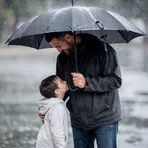
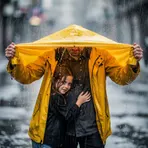
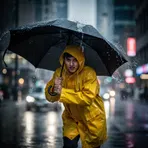
She carried an umbrella to ward off the rain while walking to her car.
Synonyms
 ∞
1.0
∞
1.0
To keep someone or something safe from harm
 187
1.6
187
1.6
Stop someone or something from coming near
 172
1.3
172
1.3
To stop people or things from entering a place
 146
2.7
146
2.7
To protect someone or something from harm
 76
4.6
76
4.6
To turn attention away from a person or thing
 73
5.0
73
5.0
To stop something bad from happening
 68
2.7
68
2.7
To make people or animals go away by frightening them
 56
3.3
56
3.3
To protect people or things from harm
 51
3.7
51
3.7
To keep away an attack, illness, or strong unwanted feeling
 47
2.5
47
2.5
Make a person or animal go away because they are afraid
 38
3.9
38
3.9
Stop something harmful from coming close and causing trouble
 34
3.9
34
3.9
Keep unwanted people or things away so they do not harm you
 30
6.4
30
6.4
To stop something bad from happening for a while
 23
4.8
23
4.8
Stop something from happening by acting early
 21
4.2
21
4.2
Make someone or something move back and stay away, often by using force
 5
9.1
5
9.1
Prevent a problem or need by acting before it happens
 3
3.8
3
3.8
To protect a person or thing from harm
 2
9.9
2
9.9
To stop danger or harm from happening
 1
8.1
1
8.1
Make animals or people who attack you go away
 1
3.3
1
3.3
To make someone or something go away by making them afraid
 1
2.8
1
2.8
To make people or animals go away by scaring them

To stop something bad from happening
Antonyms


How Protective

Surface Forms
Morphology
The meaning 'to prevent something from approaching or affecting you' is directly built from 'ward' (to guard/repel) combined with 'off' (away), so a learner who knows both words can infer the sense. This verb + particle composition is a straightforward compositional pattern and is cross-linguistically common, making the MWE transparent to a B1 learner who knows the constituents.
Etymology
The phrasal verb ward off comes from the simple idea of guarding: the word ward means 'guard' and off shows pushing something away. So imagine holding up a hand or a small shield to push danger off you, and that's why it means 'to keep something harmful away'.