

vagus nerve
 2
5.5
2
5.5

- noun
- /ˈveɪɡəs nɜrv/
- Specialized
- The brain sends signals through the vagus nerve to control heart rate and digestion.
- the vagus nerve regulates
- the right vagus nerve
- the artery and vagus nerve
Loading YouTube…
Watch on YouTubeBut then we stay connected through the vagus nerve, through the nervous system.
- But then we stay connected through the vagus nerve, through the nervous system.
- So when you hum, you're sending signals to the vagus nerve and you're calming your body down.
- And also when you see another being in pain, your vagus nerve becomes very activated.
- And this works because there's a nerve called the vagus nerve, which helps slow the heart rate down.
- Now they do that by way of a nerve pathway called the vagus nerve.
- The brain then sends information via the vagus nerve back to the heart to slow the heart down.
- And also our vagus nerve responds when we see other beings in distress.
- So it's not a leap to think that under normal circumstances that that rhythm coming in from the vagus nerve is playing a role in normal processing.
- So the vagus nerve has been considered the healing nerve of the body.
- And you have been part of the, the understanding of the vagus nerve for decades.
- I was like, hmm, OK, gut health, micronutrients, vagus nerve, brain, blood, brain barrier.
- But I showed big control in the vagus nerve.
Examples
-
So the vagus nerve has been considered the healing nerve of the body.
-
And also when you see another being in pain, your vagus nerve becomes very activated.
-
And you have been part of the, the understanding of the vagus nerve for decades.
-
But then we stay connected through the vagus nerve, through the nervous system.
-
The brain then sends information via the vagus nerve back to the heart to slow the heart down.
-
And this works because there's a nerve called the vagus nerve, which helps slow the heart rate down.
-
And by stimulating this vagus nerve, it's possible to have positive therapeutic effects in the body.
-
And also our vagus nerve responds when we see other beings in distress.
-
So when you hum, you're sending signals to the vagus nerve and you're calming your body down.
-
But pacing your breathing, just five slow breaths I've done in the operating room will send calming signals up the vagus nerve to your brain.
Synonyms
 3
8.9
3
8.9
A nerve in the chest and belly that helps control the heart, lungs, and digestion

A nerve that sends signals to the heart, lungs, stomach, and throat

A nerve that connects the brain to the voice box, heart, and stomach

A main nerve that connects the brain to the heart, lungs, and stomach

A nerve that helps control the throat, heart, lungs, and stomach
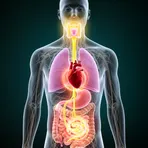
A nerve that helps control heart, breathing, voice, and how the body breaks down food
Surface Forms
Morphology
The meaning is directly and transparently derived from the parts: 'vagus' denotes a specific nerve involved in heart and digestion regulation and 'nerve' names the biological structure, so a learner who knows both constituents can infer the referent. This is a technical, compositional name (parallels exist in many languages), making the expression straightforward rather than idiomatic.
Etymology
Vagus nerve comes from the Latin word vagus, which means 'wandering', because this long nerve travels down from the brain and wanders through the chest and belly to reach many organs. That's why the name fits: the vagus nerve connects to and helps control the heart, lungs and digestion.