
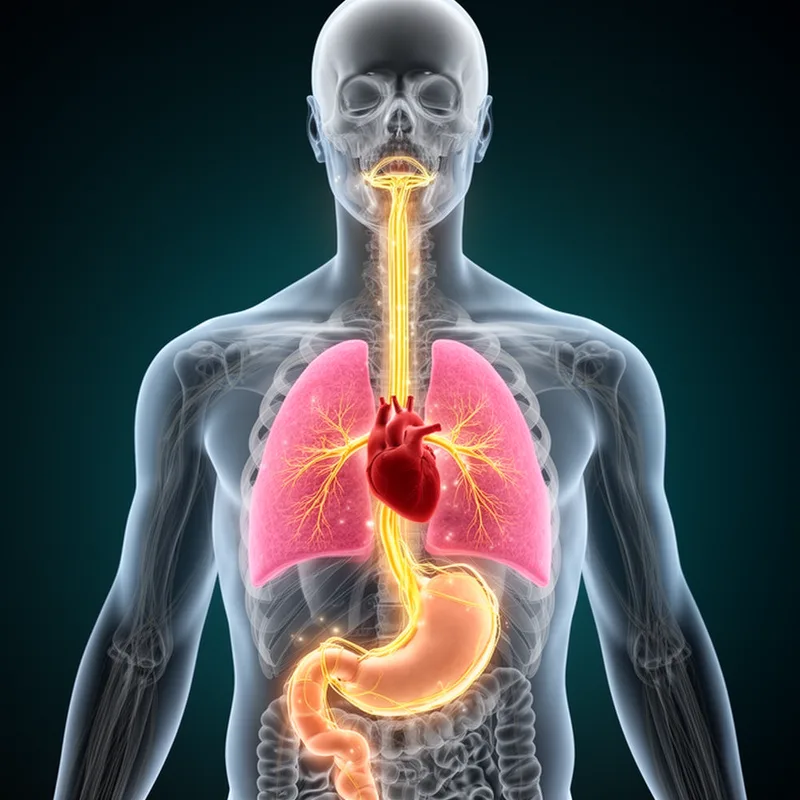
nervus vagus
- noun
- /ˈnɜrvəs ˈveɪɡəs/
- Specialized
- The surgeon identified the nervus vagus during the procedure to avoid accidental injury.
Examples
-
Damage to the nervus vagus can affect a wide range of bodily functions.
-
Did you know that the nervus vagus affects digestion?
-
Anatomy courses often cover the nervus vagus when discussing cranial nerves.
-
The nervus vagus plays a crucial role in heart rate regulation.
-
Anatomy courses often cover the nervus vagus when discussing cranial nerves.
-
Damage to the nervus vagus can affect a wide range of bodily functions.
-
The nervus vagus plays a crucial role in heart rate regulation.
Synonyms

 3
8.9
3
8.9

A nerve in the chest and belly that helps control the heart, lungs, and digestion
 2
5.5
2
5.5
A long thin part of the body that sends signals from the brain to the heart, lungs, stomach, and intestines

A nerve that sends signals to the heart, lungs, stomach, and throat

A nerve that connects the brain to the voice box, heart, and stomach

A main nerve that connects the brain to the heart, lungs, and stomach
A nerve that helps control heart, breathing, voice, and how the body breaks down food
Surface Forms
Morphology
Both constituents are essentially anatomical labels: 'nervus' indicates 'nerve' and 'vagus' identifies the vagus nerve (regulating heart and digestion). A B1 learner who knows these constituent meanings can therefore derive that 'nervus vagus' refers to the vagus (tenth cranial) nerve supplying those organs; the Latin-based, cross-linguistically similar scientific vocabulary makes the composition transparent.
Etymology
Nervus vagus comes from Latin: nervus means 'nerve' and vagus means 'wandering'. The name creates a clear picture—the nerve really wanders through the body and goes to many organs like the heart, lungs and stomach, so the name helps explain what it does.