

pneumogastric nerve
- noun
- /njuːmoʊˈɡæstrɪk nɜrv/
- Archaic
- The pneumogastric nerve plays a critical role in regulating heart rate and digestion.
Examples
-
Damage to the pneumogastric nerve can lead to voice changes and difficulty swallowing.
-
The surgeon identified the pneumogastric nerve during the procedure to avoid accidental injury.
-
The pneumogastric nerve plays a crucial role in regulating heart rate.
-
Can you explain the function of the pneumogastric nerve?
-
Damage to the pneumogastric nerve can lead to voice changes and difficulty swallowing.
-
The pneumogastric nerve plays a critical role in regulating heart rate and digestion.
-
The surgeon carefully avoided the pneumogastric nerve to prevent complications during the operation.
Synonyms

 3
8.9
3
8.9

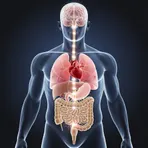
A nerve in the chest and belly that helps control the heart, lungs, and digestion
 2
5.5
2
5.5
A long thin part of the body that sends signals from the brain to the heart, lungs, stomach, and intestines

A nerve that helps control the throat, heart, lungs, and stomach
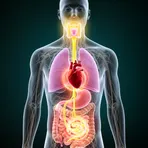
A nerve that helps control heart, breathing, voice, and how the body breaks down food

A main nerve that connects the brain to the heart, lungs, and stomach

A nerve that sends signals to the heart, lungs, stomach, and throat
Surface Forms
Morphology
The compound pairs a technical adjective derived from classical roots (pneumo- 'lung' + gastric 'stomach') with 'nerve', so a learner recognising those parts could infer it is a nerve related to thoracic and gastric organs. However, 'pneumogastric' is specialised terminology and the precise identification as the tenth cranial (vagus) nerve requires medical knowledge, making the link only partially predictable for a B1 learner.
Etymology
Pneumogastric nerve gets its name from Greek parts: pneumo meaning 'breath' or 'lung' and gastric meaning 'stomach'. Because this long nerve travels down from the throat into the chest and belly and helps the lungs and stomach, doctors also call it the 'vagus nerve', which means 'wandering', so the name explains why it controls breathing and digestion.