
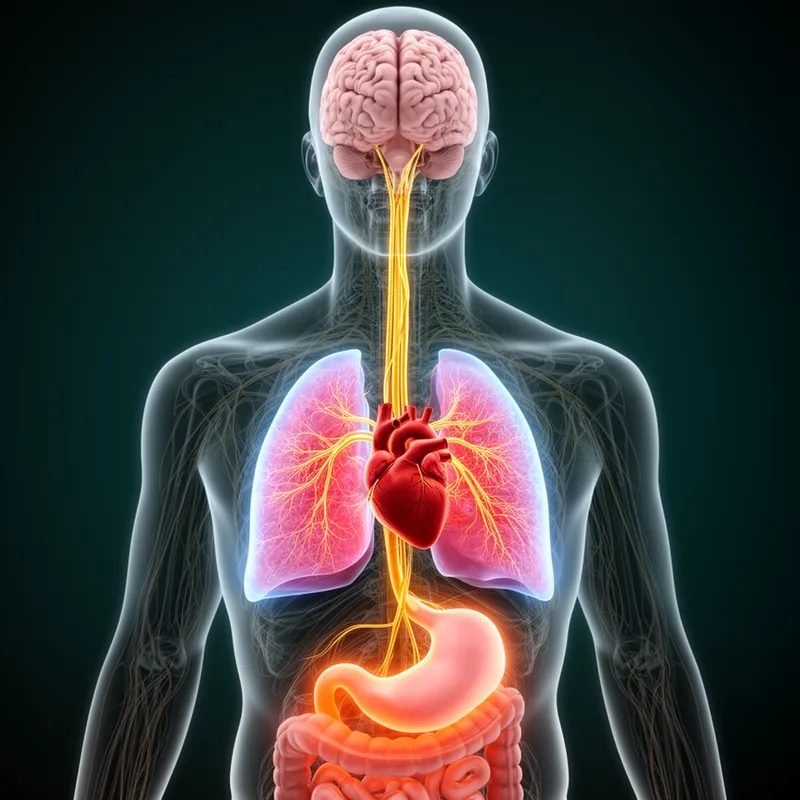
pneumogastric
- adjective
- /njuːmoʊˈɡæstrɪk/
- Archaic
- The pneumogastric nerve plays a crucial role in regulating both breathing and digestion.
Examples
-
Damage to the pneumogastric nerve can affect multiple organs, including the stomach and lungs.
-
Doctors studied the pneumogastric connections in patients with certain respiratory and digestive conditions.
-
The pneumogastric nerve plays a crucial role in digestion.
-
A healthy pneumogastric system is essential for overall wellness.
-
The pneumogastric nerve regulates the functions of various organs, such as the lungs and stomach.
-
In clinical research, the pneumogastric pathways were examined in patients suffering from digestive disorders.
-
Understanding the role of the pneumogastric nerve is crucial for treating respiratory issues.
Synonyms
 1
9.4
1
9.4

Relating to the nerve that helps control the heart, lungs, and stomach
Compounds

- Archaic
A nerve that connects the brain to the voice box, heart, and stomach
Surface Forms
Morphology
Etymology
Pneumogastric comes from the Greek parts pneumo- meaning 'breath' or 'lung' and gastro- meaning 'stomach'. So when something is called pneumogastric it means it is related to the nerve that serves both the lungs and the stomach.