
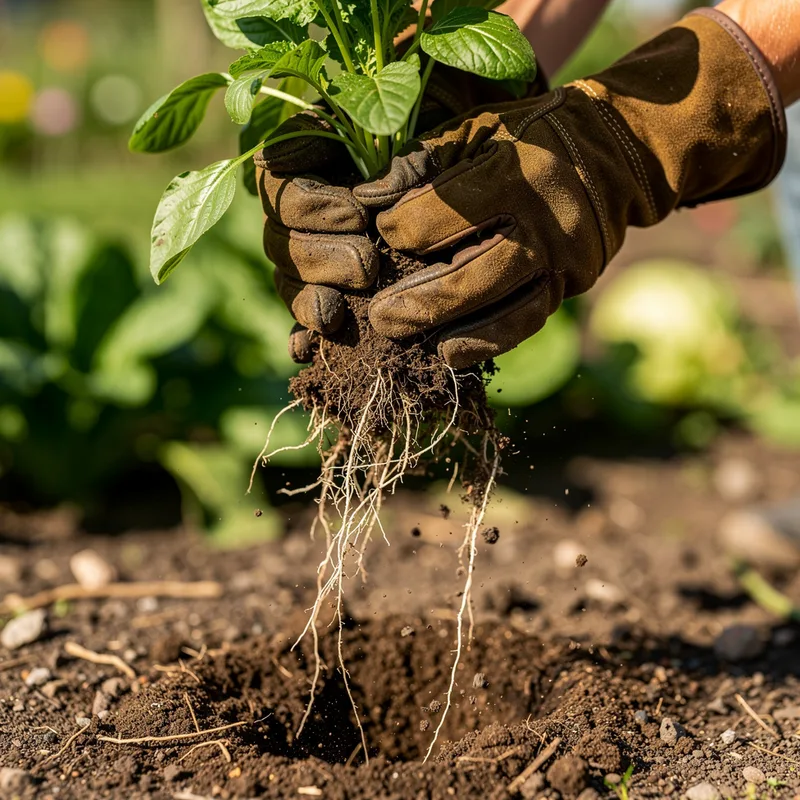
to uproot
 38
4.4
38
4.4

- verb
- /ˌʌpˈruːt/
 :
desarraigar
:
desarraigar
- She had to uproot her children from their school when she moved to a new city.
- uproot trees
- uproot families
- millions were uprooted
It's to find and uproot the cause of the stress.
- It's to find and uproot the cause of the stress.
- So the Palestinians who sorry, were uprooted.
- And we need to go beyond the quick fixes to ask these, these questions and uproot a lot of this, this chronic stress in our life.
- Epicurus uprooted and exterminated all religion from the human heart.
- If everyone is always kind of uprooting you from your world and putting you into theirs, then they're in their element and you sort of exist as this.
- The first people to be uprooted by war and identified as refugees with a claim on the conscience of the world were Belgians in World War One.
- All of my fundamental ontological assumptions about what isn't isn't possible had been uprooted, had been obliterated.
- Imogen obviously uprooted Scythe, the cat that saved books.
- If it's true, it would uproot everything, and so far my mind is still open.
- Or some ranchers complain, they tear up the, the grass, they're uprooted.
- So Sam means totally, NI means to go down and ASA means to uproot.
- If we wanted to uproot and move though to Nashville, so we're going to Tennessee.
Examples
-
His father was a telecommunications engineer for the Indian government, a job that uprooted his family every few years.
Academic text (2017) -
I'm not going to uproot my life, leave you, for that job.
-
You have to actually uproot your whole life that you was with this person.
-
Would you uproot your entire life for a job?
-
So what was it like moving all the time, having to uproot your life, and...
-
He's just not willing to uproot his family.
-
I mean, I was tempted, but if I'm gonna uproot my entire life, I need some real sign of commitment.
-
It caused excessive damage to houses and apartment buildings, flipped cars, uprooted trees and killed two people.
-
Gail's mother had warned against uprooting the child so abruptly from her old neighborhood.
Fiction book (2000) -
The first people to be uprooted by war and identified as refugees with a claim on the conscience of the world were Belgians in World War One.
Synonyms
 140
5.5
140
5.5
To make a person leave their usual place or job
 139
2.0
139
2.0
To take something out of the ground by digging
 85
6.6
85
6.6
Remove something harmful completely, for example a disease or pest
 60
6.9
60
6.9
To destroy something completely, often on purpose
 21
7.5
21
7.5
To dig up plants or root crops from the ground for harvest
 15
6.1
15
6.1
To force something or someone out of a place where they are stuck
 14
3.2
14
3.2
Remove something that is under the ground or snow using a shovel
 1
4.0
1
4.0
Pull a plant up from the ground so it cannot grow back
 1
9.9
1
9.9
To remove people completely from their homeland and culture
 1
9.9
1
9.9
To destroy something completely, including its root

Pull something completely out of the ground by its roots

To dig up roots or stumps from the ground

To dig up and remove plants or roots from the ground
Antonyms


How Thorough

Surface Forms
Morphology
Etymology
The word uproot comes from the parts up and root, like pulling a plant 'up' by its 'root'. So, to uproot something means to remove it completely from its place, whether a tree from the ground or a family moved to a new country.