

to tramp
 17
5.5
17
5.5

- verb
- /træmp/
- But if we're going to spend the day tramping around reading old gravestones, I'm turning in now.
Loading YouTube…
Watch on YouTubeAnd so we tramped daily through the woods, feeling for once in the world.
- And so we tramped daily through the woods, feeling for once in the world.
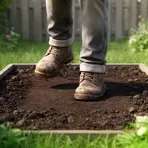
- Instead, we got to go and seek around and we're tramping around in dirt and like dust is coming up as we're walking.
Examples
-
The day had been brilliantly hot as we tramped about the ruins of nearby Corinth.
Fiction book (1996) -
We tramped in the hills, slept in the sun, and walked alone at night under the stars.
-
We turn the corner and tramp up the block back toward Philidance.
Fiction book (1993) -
And so we tramped daily through the woods, feeling for once in the world.
-
On the final day of the season, I tramped through miles of woods behind that young dog.
Fiction book (1994) -
As soon as he got out, he was back tramping the countryside... preaching nonviolence and demanding a free India.
-
Miss Willerton, her coat buttoned unevenly, tramped up Broad Street and into the supermarket.
Fiction book (1998) -
We tramped across the mountains for hours, feeling the strain in our legs.
-
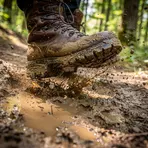
After the rain, we tramped through the muddy trails, careful not to slip.
-
During the hike, they tramped through the thick underbrush, making their way to the waterfall.
Synonyms
 ∞
1.0
∞
1.0
To move on foot at a normal speed
 93
3.0
93
3.0
To step on something with your foot, often pressing down
 21
5.5
21
5.5
To walk slowly with heavy steps because you are tired
 11
3.1
11
3.1
To walk with heavy noisy steps that make a loud sound
 10
6.4
10
6.4
To walk with heavy, steady steps, often when tired
 8
6.3
8
6.3
To walk with heavy noisy steps that make loud sounds
 7
8.8
7
8.8
Walk somewhere instead of going by car or bus
 4
7.5
4
7.5
To walk with heavy, noisy steps that make a loud sound
 4
5.5
4
5.5
To walk slowly with heavy steps because you are tired
 2
5.9
2
5.9
To walk with heavy noisy steps that show effort or anger
 2
4.9
2
4.9
To walk with heavy, clumsy, noisy steps
 1
5.3
1
5.3
To walk slowly with heavy steps, often through mud or when tired


 1
5.4
1
5.4
To walk with heavy steps across a large area

To walk slowly and with effort over long or difficult ground
Antonyms

Phrasal Verbs

To walk for a long time through the woods, often slowly and with effort
Compounds


- Archaic
1
8.6
A cargo ship that sails without a fixed route, carrying goods when available

How Heavily

Surface Forms
Etymology
Tramp likely comes from an old German word or from the sound of heavy feet, and it is the same idea you see in trample, which means 'to stamp'. So to tramp is to walk with heavy, hard steps.