

to plod
 4
5.5
4
5.5

- verb
- /plɑd/
- After a long day of hiking, we began to plod slowly back to camp, our legs heavy with fatigue.
- plod along
Examples
-
Endlessly they plod beneath the sheaves of wheat and endlessly return for more.
-
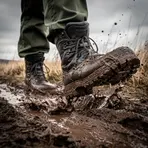
She plods through the deep mud, struggling to maintain her balance as she makes her way home.
-
The minutes plod by on the screen, and each one is just like any other.
Fiction book (1998) -
People scatter, slow to a walk, drift into small groups, plod through the rain.
Fiction book (1996) -
But most people in the world ignore evidence and plod along with what they hope would be true.
Blog text (5) -
But at least, throughout all these, India plods along in its experiments in democracy.
Blog text (16) -
Jonathan plods along, staring at the ground, barely caring to step around the puddles
Fiction book (2000) -
Scalapino plods to the kitchen in his pajamas, not yet awake.
Fiction book (1994) -
The camels slowly and indifferently plod along the seemingly endless sands, their impassive riders gently swaying with each camel movement.
Academic text (1996) -
The tired farmer plodded home after a long day in the fields, his feet feeling heavy with exhaustion.
Synonyms
 179
2.8
179
2.8
To move slowly and with effort because you are tired
 45
3.8
45
3.8
To walk by dragging your feet along the ground
 21
5.5
21
5.5
To walk slowly with heavy steps because you are tired
 17
5.5
17
5.5
To walk with heavy steps, often over rough ground
 11
3.1
11
3.1
To walk with heavy noisy steps that make a loud sound
 10
6.4
10
6.4
To walk with heavy, steady steps, often when tired
 4
7.5
4
7.5
To walk with heavy, noisy steps that make a loud sound
 2
5.9
2
5.9
To walk with heavy noisy steps that show effort or anger
 2
4.9
2
4.9
To walk with heavy, clumsy, noisy steps
 1
9.9
1
9.9
To move in a heavy, noisy, and clumsy way
 1
5.3
1
5.3
To walk slowly with heavy steps, often through mud or when tired

To walk slowly and with effort over long or difficult ground
Antonyms


Phrasal Verbs

How Effortful

Surface Forms
Etymology
Plod comes from the same heavy sound 'plod-plod' of slow footsteps, a helpful way to remember the beat of each step. So to plod is 'to walk slowly with heavy steps', often because you are tired or the way is hard to move through.