

to trudge
 21
5.5
21
5.5

- verb
- /trʌdʒ/
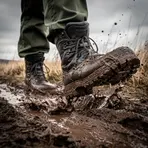
- In the cold rain, the workers trudged through the muddy field to finish the harvest.
- trudged back
Loading YouTube…
Watch on YouTubeHe gets out of the car, climbs the fence and starts trudging into the field in the snow.
- He gets out of the car, climbs the fence and starts trudging into the field in the snow.
- But it wasn't like mountain like orienteering or, you know, you're not trudging through bogs, through the forest.
- I would have just you put my head down and and trudged on.
- And my mom apparently trudged through it and she said like, don't, don't bother.
- But with each lash of the whip that I take, learning that I can take it and continue to trudge on.
- I guess we just trudge onward together for we know not else what to do.
- So I was just trudging through and just wishing a bear would eat me, get it over with.
- I do see you really trudging through it in a very honest way.
Examples
-
He gets out of the car, climbs the fence and starts trudging into the field in the snow.
-
Following the scuff marks he'd left in the snow, she trudged up over the ridge.
Fiction book (1990) -
Well, uh, are we to trudge back to that miserable ship and wait?
-
- How am I supposed to trudge in knee-deep snow with this?
-
We went back to the stairs and followed him as he trudged heavily to the third floor.
Fiction book (1990) -
Soldiers were forced to trudge through the snow in their Mediterranean style sandals with their bare legs exposed.
-
The remaining group trudged on towards Nottingham, stopping to demand ale at several inns on the way.
Academic text (2010) -
They trudged up Elm Street in disappointment.
-
In the morning, our team trudged back up the hill with shovels, buckets, bags, and cameras.
Academic text (2003) -
The sky was bleak, and so were my photo prospects as I trudged among the leafless trees and shrubs.
Academic text (1993)
Synonyms
 179
2.8
179
2.8
To move slowly and with effort because you are tired
 93
3.0
93
3.0
To step on something with your foot, often pressing down
 17
5.5
17
5.5
To walk with heavy steps, often over rough ground
 11
3.1
11
3.1
To walk with heavy noisy steps that make a loud sound
 10
6.4
10
6.4
To walk with heavy, steady steps, often when tired
 4
7.5
4
7.5
To walk with heavy, noisy steps that make a loud sound
 4
5.5
4
5.5
To walk slowly with heavy steps because you are tired
 2
5.9
2
5.9
To walk with heavy noisy steps that show effort or anger
 2
4.9
2
4.9
To walk with heavy, clumsy, noisy steps
 1
5.3
1
5.3
To walk slowly with heavy steps, often through mud or when tired

To walk slowly and with effort over long or difficult ground
Antonyms


How Tiring

Surface Forms
Etymology
Trudge as a verb gives the same picture: think of 'dragging your feet' when you are very tired or the path is hard. So to trudge is to walk slowly with heavy steps.