

submaxillary salivary gland
- noun
- /sʌbˈmæksɪˌlɛri səˈlaɪvəri ɡlænd/
- Specialized
- The submaxillary salivary gland is responsible for producing much of the saliva when you sleep.
Examples
-
Swelling of the submaxillary salivary gland can indicate an underlying infection.
-
During surgery, extreme care must be taken not to damage the submaxillary salivary gland.
-
The submaxillary salivary gland plays a crucial role in digestion.
-
Many people are unaware of the submaxillary salivary glands in their bodies.
-
During surgery, extreme care must be taken not to damage the submaxillary salivary gland.
-
Swelling of the submaxillary salivary gland can indicate an underlying infection.
-
The submaxillary salivary gland is responsible for producing much of the saliva when you sleep.
Synonyms

 3
4.0
3
4.0

A small organ in the mouth that makes saliva to help break down food
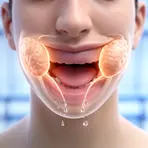
A gland under the lower jaw that makes saliva

A gland under the lower jaw that makes saliva and releases it under the tongue, often at night
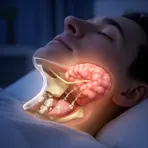
One of two glands beneath the lower jaw that make saliva, often at night

A gland under the lower jaw that makes saliva
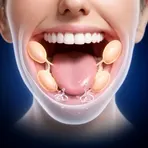
A gland inside the lower jaw that makes saliva under the tongue
Surface Forms
Morphology
submaxillary + salivary + gland
The phrase is fully compositional: 'submaxillary' denotes 'under the (maxillary) jaw', 'salivary' relates to saliva production, and 'gland' is an organ — together they literally describe a gland beneath the jaw that produces saliva. Although technical, the meaning follows standard morphological/medical naming patterns (prefix + descriptor + noun), so a learner who knows the constituent elements can derive the MWE's meaning.
Etymology
Submaxillary salivary gland gets its name from a simple description: submaxillary means 'under the jaw' and salivary gland is a gland that makes 'saliva'. It sits below the lower jaw and pours saliva into the mouth, so the name tells where it is and what it does.