
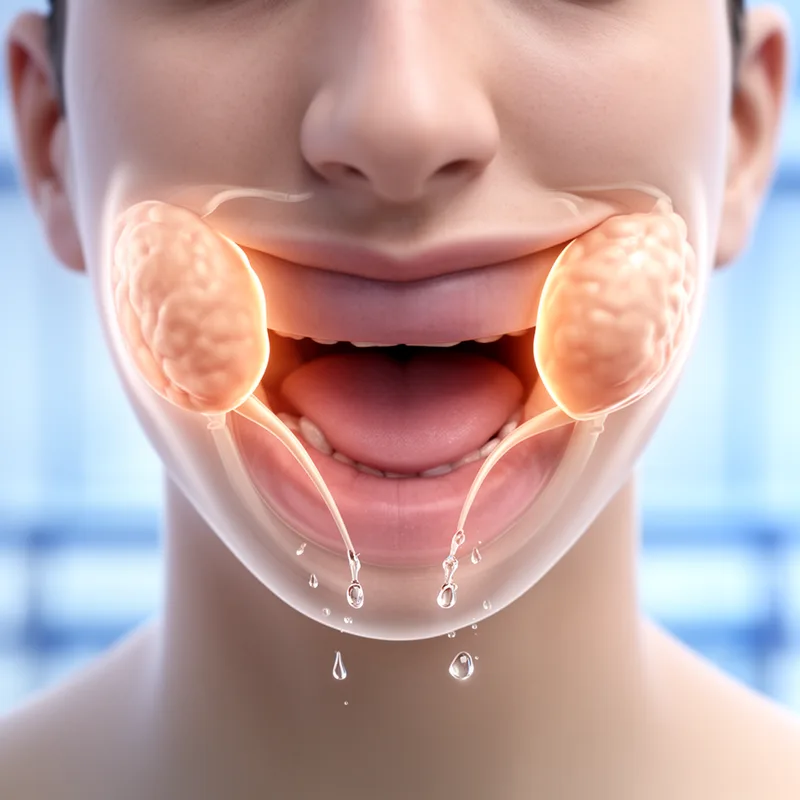
submaxillary gland
- noun
- /ˌsʌbˈmæksɪˌlɛri ɡlænd/
- Specialized
- The submaxillary gland is responsible for much of the saliva produced during sleep.
Examples
-
Swelling below the jaw can sometimes indicate inflammation of the submaxillary gland.
-
The surgeon carefully removed the submaxillary gland to treat the chronic infection.
-
The submaxillary gland plays a crucial role in saliva production.
-
Many people are unaware of their submaxillary glands.
-
The submaxillary gland produces a large amount of saliva, especially while we sleep at night.
-
Doctors often examine the submaxillary gland for signs of swelling indicating potential health issues.
-
After surgery, the patient needed to monitor the function of their submaxillary gland for proper saliva production.
Synonyms

A small part under the lower jaw that makes saliva and sends it under the tongue

A gland under the lower jaw that makes saliva and releases it under the tongue, often at night
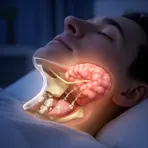
One of two glands beneath the lower jaw that make saliva, often at night

A gland under the lower jaw that makes saliva
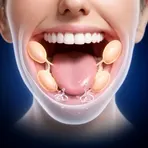
A gland inside the lower jaw that makes saliva under the tongue
Surface Forms
Morphology
submaxillary + gland
The compound is compositionally analyzable: sub- (under) + maxillary (relating to the maxilla/jaw) + gland yields the meaning 'gland beneath the jaw', so the semantics are derivable from parts. However, 'submaxillary'/'maxillary' are technical, Latin-derived medical terms that a typical B1 learner would not know or be able to decompose reliably, so comprehension is not fully predictable without exposure or morphological knowledge.
Etymology
The name submaxillary gland comes from Latin parts sub and maxilla, which mean 'under' and 'jaw', so the name points to the small saliva gland that sits below the lower jaw and makes saliva.

