

salivary
 1
5.5
1
5.5

- adjective
- /səˈlaɪvəri/
- Second, odontogenic tumors and salivary gland tumors affect different age groups, although there is some overlap.
- salivary glands
- salivary gland tumor
- salivary cortisol
Loading YouTube…
Watch on YouTubeAnd then we were doing studies on the salivary immune system.
- And then we were doing studies on the salivary immune system.
- He had like a kind of a salivary deal disorder.
Examples
-
Myoepithelial tumors of the salivary gland are unusual; they account for less than 1% of all salivary gland tumors.
Academic text (2009) -
Don't you want to give your salivary glands A chance to function?
-
And then we were doing studies on the salivary immune system.
-
The origin of this tumor in a major salivary gland is rare.
Academic text (2006) -
He has this salivary gland condition.
-
No significant effects were obtained for salivary cortisol in either group (see Table 1).
Academic text (2003) -
The submandibular gland is the second largest of the salivary glands.
Academic text (2004) -
Adults and children with salivary gland enlargement seem to experience slower progression of HIV disease.
Academic text (2000) -
In fact, mucoepidermoid carcinoma is the most common salivary gland malignancy in children.
Academic text (2006) -
Chemicals in the salivary glands of insects may facilitate the spread of viruses to animals.
Compounds

- Specialized
3
4.0
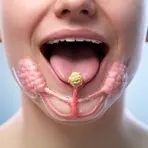
A small organ in the mouth that makes saliva to help break down food
- Specialized
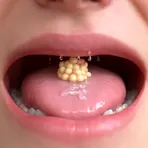
A small hard lump that forms inside the parts of the mouth that make saliva

- Specialized
A small part under the tongue that makes saliva to keep the mouth moist

- Specialized
A gland under the lower jaw that makes saliva and releases it under the tongue, often at night

- Specialized
A small part under the lower jaw that makes saliva and sends it under the tongue
Surface Forms
Morphology
Etymology
The word salivary comes from the Latin word saliva, which meant 'spit' or 'spittle', and the ending -ary means 'relating to'. So salivary simply means 'relating to or producing saliva', as in salivary glands that make the spit in your mouth.