

to step out
 234
2.3
234
2.3

- phrasal verb
- /stɛp aʊt/
- Before the meeting started, I decided to step out for a quick breath of fresh air.
Loading YouTube…
Watch on YouTubeBut that is somebody trying to step out and talk.
- But that is somebody trying to step out and talk.
- I'm going to get ready to step out of the house.
- It's so important to to to step out of your home with intent and intention.
- Cynthia Lopez, step out of line.
- You can't buy an NBA jersey that the players step out on the floor with, right?
- I see this like glitter gold gown step out of the trailer.
- So I'm got the suit to match my car and we stepped out.
Examples
-
I wish I had the confidence to step out and do it.
Academic text (2011) -
I'm going to get ready to step out of the house.
-
The second you step out, you feel it.
-
Maybe step out of the car, Sir.
-
Oh, she had to step out for a minute.
-
We must be willing to step out of the safety of what has worked in the past.
Academic text (2007) -
OK, so I want you to start stepping out of your comfort zone.
-
Let's step out of our comfort zones together.
-
New students, please know that you now have the opportunity to step boldly out into your future.
-
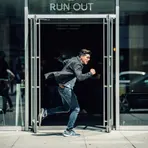
Pushing the door open, Dave stepped out and paused to look things over for himself.
Fiction book (1991)
Synonyms
 ∞
1.0
∞
1.0
Leave a place or situation
 ∞
3.0
∞
3.0
Leave a place quickly or suddenly
 ∞
1.0
∞
1.0
Leave a place to do a task, for example to help people
 709
1.0
709
1.0
To leave a place or person and go somewhere else
 167
2.5
167
2.5
To leave a place to start a trip
 156
9.9
156
9.9
To leave a place quickly, often suddenly
 147
3.7
147
3.7
To leave a place quickly and secretly to avoid trouble
 125
3.7
125
3.7
To leave a place quietly so no one notices you
 78
2.0
78
2.0
Leave a place suddenly, often to avoid someone or something
 39
3.8
39
3.8
To leave a place quietly without anyone noticing
 33
4.0
33
4.0
Leave a place quietly so others do not notice
 32
3.4
32
3.4
To leave a place quietly without anyone noticing
 24
8.4
24
8.4
To leave a place and move away
 16
3.2
16
3.2
To leave a place for a short time to do something
 14
6.8
14
6.8
Leave a place or start a journey
 12
7.2
12
7.2
To leave a place quickly and quietly to avoid something you should do
 11
2.8
11
2.8
To get out of a vehicle or place quickly with a small jump
 5
4.9
5
4.9
Leave a place suddenly and quickly because you feel scared
 1
8.9
1
8.9
To leave a place by going out
 1
9.1
1
9.1
To leave a place quietly or suddenly without telling others


 1
2.3
1
2.3
To go outside briefly to breathe and feel better
 1
7.9
1
7.9
To leave a place quickly, often without saying goodbye
 1
7.9
1
7.9
Leave a place or conversation quietly to avoid attention

Leave a place quickly because you are not welcome
Antonyms


How Long

Surface Forms
Morphology
The meaning 'to leave a room or building briefly' is directly and transparently derived from combining 'step' (move by placing a foot) with 'out' (away from the interior/outdoors). This motion verb + particle composition is a common, cross-linguistically accessible pattern, so an average B1 learner who knows the constituent words will readily infer the MWE meaning.
Etymology
The phrasal verb step out comes from the simple picture of taking one step out of a room or building to go outside for a short time. That's why it now means 'to leave a place briefly'.