

to stand back
 159
1.6
159
1.6

- phrasal verb
- /stænd bæk/
- Please stand back from the edge of the cliff for your safety.
- stand back and watch
- stand back and look
- let us stand back
Loading YouTube…
Watch on YouTubeAnd so yes, of course, we'll just stand back and watch what humans do.
- And so yes, of course, we'll just stand back and watch what humans do.
- And so we all kind of collectively stood back and the boundaries just fell away.
- Their dance moves were so on point with each other and people used to stand back just to watch them two dancing.
- Because if we had stood back and let, let Ukraine fall, what would happen to Taiwan?
- It can be hard to stand back and go, wow, that chain of events is the whole story.
- Proud Boys, stand back and stand by.
Examples
-
At the end, you stand back and say, 'Man, I did that!'
Academic text (2014) -
Perhaps this is an especially appropriate time to stand back in admiration.
Academic text (2003) -
OK, set these in here, stand back and take a look.
-
It's also something that he can stand back from and consider at a distance.
-
Stand back, let him through.
-
We can observe the changes, stand back, and let them happen.
Academic text (2010) -
As the flames rise, the women stand back from the intense heat.
Academic text (2007) -
But at some point, you have to stand back, reassess yourself.
Academic text (2005) -
Please stand back.
-
Stand back.
Synonyms
 590
1.6
590
1.6
Keep a distance from people or things you want to avoid
 356
2.8
356
2.8
Move away from someone, or stop taking part in something
 283
1.7
283
1.7
To step away to an earlier place
 187
1.6
187
1.6
Stop someone or something from coming near
 103
3.5
103
3.5
To do nothing when you should help
 94
2.3
94
2.3
Move your body so you do not face someone or something
 57
3.7
57
3.7
To move back to a safer place when facing danger
 34
4.6
34
4.6
To hesitate and stay behind the group
 32
3.9
32
3.9
To stay away from people or things to avoid close contact
 17
3.6
17
3.6
To move to a position behind other players, for example to prepare a pass or to help defend
 10
6.3
10
6.3
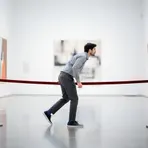
To avoid getting too close to someone or something, often emotionally
Antonyms


How Far

Surface Forms
Morphology
The meaning 'to move away or keep a distance' is directly and transparently derived from combining 'stand' (remain in a position) with 'back' (toward the rear or away). This motion/particle combination is a regular, compositional English pattern and would be readily understood by a B1 learner who knows both constituents, especially in safety contexts like 'stand back from the edge.'
Etymology
Stand back comes from a simple command used in dangerous places: telling people to stand and move back to give space. That's why it now means 'to move away' or 'keep a distance', often for 'safety' or to avoid getting involved.