

to spread over
 17
3.6
17
3.6

- phrasal verb
- /sprɛd ˈoʊvər/
- Heavy rainfall half the year causes our creeks and rivers to flood and spread over wide sections of densely thicketed and forested bottomland.
- spread over an area
- spread over hundreds of miles
- spread over a period
Loading YouTube…
Watch on YouTubeBut Robin and Angela have black tablecloths spread over their desks.
- But Robin and Angela have black tablecloths spread over their desks.
- Loathsomeness waits and dreams in the deep, and decay spreads over the tottering cities of man.
Examples
-
The frost began to spread over the fields, creating a beautiful winter landscape.
-
The painter watched as the colors spread over the canvas, blending together beautifully.
-
OK, so the total energy is still there, but it's now spread over a much larger volume.
-
Testing was conducted in three group sessions spread over a period of nine weeks.
Academic text (1990) -
Soon these two grew quiet until silence spread over the entire arena.
-
Actually, the bait is spread over our city at night, like a glaze.
-
The 1,163 students are spread over 58 schools, eight of which were also members of NAIS.
Academic text (2006) -
As soon as the music started blaring out, an enormous grin spread over his face.
Fiction book (1999) -
Concord-Carlisle's Learning Commons was spread over three floors connected by ramps.
Academic text (2015) -
The Polish gangs are heavily armed and organized on military lines, and their activity has spread over the whole of the country at breakneck speed.
Synonyms
 ∞
1.0
∞
1.0
To put something over another thing to protect or hide it
 680
3.2
680
3.2
To make something reach farther, such as more places or people
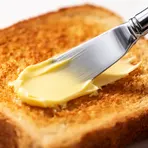 664
1.6
664
1.6
To put a thin layer over a surface
 263
1.3
263
1.3
Put a substance onto a surface to cover it
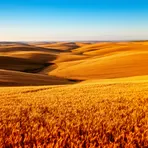 127
2.3
127
2.3
To extend across a large area or long distance
 105
2.8
105
2.8
To cover something with a thin layer of a substance
 104
4.4
104
4.4
To cause people and things, like a crowd or fog, to spread over a wide area
 87
2.0
87
2.0
Give things to several people or places
 40
5.5
40
5.5
To spread out and reach many people or places
 24
3.1
24
3.1
To arrange or unfold things so they cover a larger area
 24
6.7
24
6.7
To put one thing on top of another so both are visible
 13
5.0
13
5.0
To reach across an area so parts are on both sides
 11
4.2
11
4.2
To cover something with a layer of material
 6
5.6
6
5.6
To cover something completely, as if by a blanket or mist
 4
3.5
4
3.5
To spread over something and cover it, as moss or vines do
 3
3.5
3
3.5
To put one thing on top of another so it partly covers it
 2
4.2
2
4.2
To continue for a long distance along a narrow area
 1
8.5
1
8.5
To put one thing on top of another so they line up and can be seen
 1
7.1
1
7.1
Move across a surface and cover it, like mist or color


 1
8.0
1
8.0
To cover something completely, often by surrounding it with cloth or paper

To cover something with an extra layer, often paint or varnish

To cover a surface by scattering things like papers or flowers
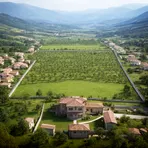
To stretch across a large area
How Much

Surface Forms
Morphology
The meaning 'to extend or form a layer or cover over something' is directly and compositionally derived from 'spread' (to distribute across a surface) combined with the preposition 'over' (indicating position above or covering). This is a common verb + preposition pattern that is cross-linguistically frequent and therefore readily understandable to a B1 learner who knows both constituents.
Etymology
Spread over comes from the image of fog, icing, or vines moving outward and laying across a surface, with spread showing the movement and over showing that something is covered. So, it means 'to extend' or 'form a layer' across something.