

to lay over
 3
3.5
3
3.5

- phrasal verb
- /leɪ ˈoʊvər/
- Carefully, he laid a cold cloth over a bruise at her temple.
- laid a hand over
- laid slices over
- laid a cloth over
Loading YouTube…
Watch on YouTubeYou'll trace your desired shape in the block of wood, cut that out, and then you're going to take another wood, lay that over your cut piece and trace a handle.
- You'll trace your desired shape in the block of wood, cut that out, and then you're going to take another wood, lay that over your cut piece and trace a handle.
Examples
-
Jellie took off her stocking cap and laid her coat over the back of a chair.
Fiction book (1993) -
Ross was able to step forward and gently lay the covering over her.
Fiction book (1991) -
We'll lay our sleeping bags over the top.
-
Lay the rag over his eyes.
-
The bathroom door was open, and shards of glass lay all over the tiles in front of the toilet.
Fiction book (1996) -
I unfolded a rug, and we laid it over our legs and turned off the headlights.
Fiction book (2001) -
I couldn't budge you, so I just laid a quilt over you and left you on the hearth.
Fiction book (1992) -
Oliver hovers as Hana adds the rice to a small cache of provisions, then lays another blanket over the patient.
Fiction book (1996) -
Please lay the blanket over the table to keep it clean.
-
She laid the photographs over the paper to create a collage.
Synonyms
 ∞
1.0
∞
1.0
To put something over another thing to protect or hide it
 28
4.2
28
4.2
To cover something completely, for example with fog or snow
 24
6.7
24
6.7
To put one thing on top of another so both are visible
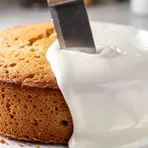 17
3.6
17
3.6
Form a layer across a surface, like fog or icing
 11
4.2
11
4.2
To cover something with a layer of material
 1
8.5
1
8.5
To put one thing on top of another so they line up and can be seen
 1
7.1
1
7.1
Move across a surface and cover it, like mist or color

To cover something with an extra layer to protect it or make it look nicer
Antonyms


How Covered

Surface Forms
Morphology
The meaning 'to place something on top of another object' is directly and transparently derived from combining 'lay' (to set or position something) with 'over' (indicating position on top/covering). This compositional pattern (verb + spatial particle/preposition) is common across languages and follows ordinary English usage, so a B1 learner who knows both constituents will readily infer the meaning.
Etymology
Lay over comes from the literal idea of lay meaning to put and over meaning on top, like when you lay over a blanket on a child to cover them. So lay over means 'to place something on top of another object so that it covers or partly covers it'.