

to extend
 520
3.2

- verb
- /ɪkˈstɛnd/
- The effects of thawing will also extend far beyond the Arctic.
- extend the period
- extend the study
- extend the findings
Loading YouTube…
Watch on YouTubeYou've created this brand that extends far past that.
- You've created this brand that extends far past that.
- And I think we can, you know, extend this to either gender.
- You know that what you just described extends to science.
- But with a child, that dynamic extends to the workplace as well.
- He's trying to extend science to everything.
- A couple of years later we extended this so it became worldwide.
- We should be able to shoot, create and extend stories completely for free.
- They have a right to extend it for maybe two more years.
- Tax cuts are getting extended five years approximately.
- He was trying to extend his business in the United States.
Examples
-
All we're going to do is extend our side lengths.
-
There are also options to extend the loan term.
-
A couple of years later we extended this so it became worldwide.
-
State courts often extend voting hours and things like that.
-
Oh, so you can extend your vacation?
-
But her achievements extend far beyond the runway.
-
All this is evidence of authentic learning that extends beyond the lesson and even the classroom.
Academic text (2012) -
We'll extend the house-to-house canvas by four blocks.
-
NATO allies are, however, likely to extend their presence on the ground in the Baltic state.
Academic text (2015) -
The teacher decided to extend the deadline for the assignment to give students more time.
Synonyms
 917
2.5
To grow larger in size, amount, or importance
 768
1.6
To put a thin layer over a surface
 475
3.4
Extend an effect into another place or time
 222
3.3
To go across an area or distance
 129
4.8
Make something seem bigger than it really is
 123
3.4
Reach up to a certain point or limit
 90
3.9
To make or become wider and include more things
 84
1.1
To last over a distance or time
 76
3.9
To make something last longer
 67
3.0
To make something bigger in size or amount
 30
2.4
Make something longer in size, distance, or time
 21
4.0
Make a conversation or event last longer than usual
 7
5.8
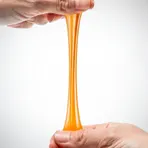
To make something longer by stretching or pulling it
 4
4.2
To continue for a long distance along a narrow area
 2
7.8
To make something last longer than it needs to


 1
4.2
To reach farther than something else, for example an arm or bridge
Antonyms


Idioms


Phrasal Verbs

How Extensive

Surface Forms
Morphology
Etymology
The word extend comes from the Latin extendere, from ex- 'out' and tendere 'to stretch'. So to extend an area or influence is like 'stretching' it out to reach more places, which explains its meaning of increasing range or scope.