

to skip out
 22
7.2
22
7.2

- phrasal verb
- /skɪp aʊt/
- Informal
- I know you stay until homeroom, when they do attendance, and then you skip out.
Loading YouTube…
Watch on YouTubeYou have all kinds of excuses to just skip out on things.
- You have all kinds of excuses to just skip out on things.
- We hardly have any delinquents or people skipping out or anything like that.
Examples
-
Stu arrived on the outskirts of Houston feeling liberated after skipping out on his meeting in New York.
-
I can't skip out on the afternoon session.
Fiction book (2001) -
You want to skip out now?
-
How about you skip out early and take advantage of me tonight?
-
I was just wondering if I might skip out a little bit early for the holiday weekend.
-
I won the race and unfortunately had to skip out of the awards ceremony and events following the race.
Blog text (24) -
"I am not the kind of person who skips out on doing her work."
Blog text (25) -
Everyone was super mad about at us for skipping out on Gabe's birthday party.
-
You're gonna skip out of the girls' volleyball game early?
-
My friend decided to skip out on the meeting to avoid answering tough questions.
Synonyms
 ∞
1.0
∞
1.0
To go away from a place, person, or group
 632
3.5
632
3.5
Leave a person, place, or situation without taking part anymore
 247
7.1
247
7.1
Leave suddenly to avoid a responsibility or task
 164
3.1
164
3.1
To leave a meeting or event suddenly to show you disagree
 147
3.7
147
3.7
To leave a place quickly and secretly to avoid trouble
 125
3.7
125
3.7
To leave a place quietly so no one notices you
 112
3.4
112
3.4
Leave a place suddenly because you are angry or protesting
 103
7.0
103
7.0
To not attend or take part in something you should, often to do something else instead
 78
2.0
78
2.0
Leave a place suddenly, often to avoid someone or something
 41
6.3
41
6.3
Go away suddenly without warning or explanation
 37
3.5
37
3.5
To leave a place suddenly to show you are angry or upset
 28
8.1
28
8.1
Leave a place suddenly and secretly to avoid trouble or debt
 12
7.7
12
7.7
Leave a place quickly, often in a rude way
 12
7.2
12
7.2
To leave a place quickly and quietly to avoid something you should do
 1
9.1
1
9.1
To leave a place quietly or suddenly without telling others
 1
9.9
1
9.9
To leave a place quickly because you do not want to be there


 1
7.9
1
7.9
To leave a place quickly, often without saying goodbye

To leave a place suddenly, usually to go somewhere else

Decide not to go to an event or activity
Antonyms


How Secretly
- Formal
11
8.5

- Informal
22
7.2
- Informal
17
3.6
39
3.8
∞
1.0
Surface Forms
Morphology
The meaning 'to leave unexpectedly or without giving notice' is directly derivable from combining 'skip' (to leave suddenly/secretly) with 'out' (away/from the interior), following a common English verb+particle pattern where 'out' marks leaving. This compositional, literal relation is predictable and frequent, so a B1 learner who knows both constituents would likely infer the MWE's meaning.
Etymology
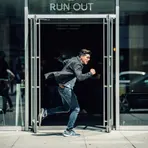
Skip out may come from the picture of someone quietly skipping through the back door out of a place to avoid paying a bill or doing a job. So, skip out means 'to leave suddenly or without notice, especially to avoid a duty or responsibility'.