

to walk out
 112
3.4
112
3.4

- phrasal verb
- /wɔk aʊt/
- Informal
- After the controversial decision was announced, the audience began to walk out of the theater.
- walk out of the room
- walk out the door
Loading YouTube…
Watch on YouTubeThey lose the job, the spouse walks out, they lose some money.
- They lose the job, the spouse walks out, they lose some money.
- And I seriously considered walking out the door, never coming back again.
- Fred walked out the door, got hit by a truck.
Examples
-
Do you really think I am gonna let you walk out of here.
-
You'll walk out of here in half an hour a free man.
-
And when I walk out, I feel better.
-
So we walk out and now we're out.
-
We're walking out of here fast.
-
You walked out on your wife and kids for a year.
-
"Thank you," he said, then he walked out of the house with his daughter.
Fiction book (1994) -
We make eye contact and the family just walks out and drives away.
-
So when you walk out of there, you're walking out at great risk.
-
You're gonna walk out on me?
Synonyms
 ∞
1.0
∞
1.0
To go away from a place, person, or group
 ∞
1.0
∞
1.0
Leave a place or situation
 ∞
3.0
∞
3.0
Leave a place quickly or suddenly
 ∞
1.0
∞
1.0
Leave a place to do a task, for example to help people
 632
3.5
632
3.5
Leave a person, place, or situation without taking part anymore
 164
3.1
164
3.1
To leave a meeting or event suddenly to show you disagree
 156
9.9
156
9.9
To leave a place quickly, often suddenly
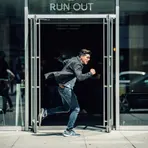 78
2.0
78
2.0
Leave a place suddenly, often to avoid someone or something
 41
6.3
41
6.3
Go away suddenly without warning or explanation
 37
3.5
37
3.5
To leave a place suddenly to show you are angry or upset
 37
8.1
37
8.1
Tell someone to leave in a rude way
 22
7.2
22
7.2
To leave without telling anyone to avoid a duty or responsibility
 14
6.8
14
6.8
Leave a place or start a journey
 12
7.7
12
7.7
Leave a place quickly, often in a rude way
 11
4.5
11
4.5
Leave a place quickly because you are angry
 11
2.8
11
2.8
To get out of a vehicle or place quickly with a small jump
 5
4.9
5
4.9
Leave a place suddenly and quickly because you feel scared
 5
5.8
5
5.8
To leave a place suddenly and unexpectedly
 3
8.2
3
8.2
To leave a place quickly to escape danger
 2
2.5
2
2.5
Leave a place quickly because you are in a hurry
 1
9.1
1
9.1
To leave a place quietly or suddenly without telling others
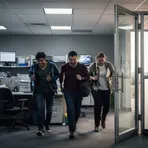 1
9.9
1
9.9
To leave a place quickly because you do not want to be there


 1
7.9
1
7.9
To leave a place quickly, often without saying goodbye

To walk out suddenly while showing anger

To leave a place quickly, often to avoid trouble

To leave a place suddenly, usually to go somewhere else

Leave a place quickly because you are not welcome
Antonyms

How Abrupt

Surface Forms
Morphology
The core idea of leaving is directly derivable from 'walk' (move on foot) + 'out' (away/exit), so a learner who knows both words would likely infer that 'walk out' involves leaving. However, the specific workplace/protest sense — stopping work and leaving as a form of protest — is a pragmatic extension of ‘leave’ that is not fully predictable from the constituents alone, so it requires some exposure.
Etymology
The expression walk out comes from the image of someone standing up and walking 'out' of a room in anger or shock. That's why it means 'to leave a place suddenly'.