
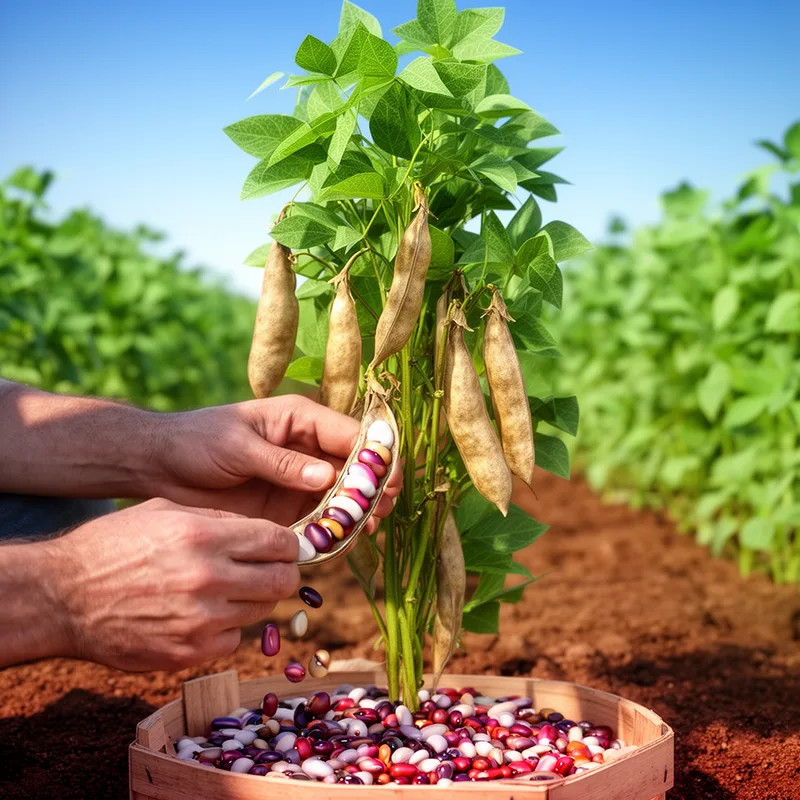
shell bean plant
- noun
- Farmers often rotate shell bean plants with other crops to maintain soil health.
Examples
-
The shell bean plant requires well-drained soil and full sunlight to thrive.
-
I love growing shell bean plants in my garden.
-
This region is known for its high-yield shell bean plant varieties.
-
The shell bean plant thrives in warm climates.
-
Farmers often rotate shell bean plants with other crops to maintain soil health.
-
The shell bean plant requires well-drained soil and full sunlight to thrive.
-
This region is known for its high-yield shell bean plant varieties.
Synonyms


 1
1.4
1
1.4
A plant that produces beans you can eat

A bean plant grown for the seeds that people eat, picked when ripe but not dry

A garden plant grown for its large flat beans that people or animals eat

An upright plant grown for its large flat edible seeds and food for animals
A large flat bean that people cook and eat, also called fava

A tall plant grown for large flat seeds eaten by people and fed to animals

A plant from Europe that produces large flat seeds eaten by people and fed to animals

A plant with seeds used to make food, oil, and animal feed

A plant that produces large flat seeds called Lima beans
A small flat green bean or the plant that grows it eaten as food

A small black bean often dried and used in cooking

A bean plant grown worldwide for its edible pods and seeds
A plant that grows beans people cook and eat

A climbing or bushy vegetable that produces edible beans
Surface Forms
Morphology
The meaning is directly derivable from the constituents: 'shell' (to remove a shell or pod) + 'bean' (edible seed) + 'plant' (a plant), i.e. a plant whose beans are intended to be shelled for their seeds. This is a straightforward compositional noun phrase following normal English modifier + noun patterns, so a B1 learner who knows the parts should understand it.
Etymology
The name shell bean plant comes from the farming idea of shell, which is taking the bean out of its pod to eat. Farmers used this name for plants grown mainly for their 'edible seeds', so today it means a bean plant grown for the seeds rather than the pod.