

Phaseolus vulgaris
- noun
- /ˈfeɪziələs ˈvʌlɡərɪs/
- Specialized
- Many traditional dishes around the world include varieties of Phaseolus vulgaris as a key ingredient.
Examples
-
Farmers in many countries cultivate Phaseolus vulgaris for its nutritious beans.
-
Phaseolus vulgaris is the scientific name for the plant that produces common green beans.
-
The Phaseolus vulgaris plant is highly nutritious.
-
Farmers in Mexico cultivate Phaseolus vulgaris for its beans.
-
I planted a variety of Phaseolus vulgaris in my garden, and now I have a great harvest of beans.
-
The Phaseolus vulgaris is a staple in many diets around the world, celebrated for its nutritious seeds.
-
In my cooking class, we learned how to prepare dishes using Phaseolus vulgaris, highlighting its versatility.
Synonyms
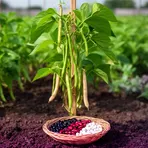
A plant that grows beans people cook and eat

A climbing or bushy vegetable that produces edible beans
Surface Forms
Morphology
The name is a straightforward Latin binomial combining the genus Phaseolus (a bean plant) with the epithet vulgaris (meaning 'widespread' or 'common'), so a learner who knows those constituents can infer 'the common/widespread bean species' (common bean). This follows regular scientific naming conventions used across languages, making the overall meaning transparently derivable from the parts.
Etymology
Phaseolus vulgaris is a scientific name that comes from Latin. Phaseolus means 'bean' and vulgaris means 'common', so the name simply says 'common bean' and helps you remember it is the everyday bean grown and eaten for food.

