

to seal in
 15
3.9
15
3.9

- phrasal verb
- /siːl ɪn/
- The fog has sealed us in so completely that we are traveling blind.
Loading YouTube…
Watch on YouTubeBut now we're trying to go out, trying to unscrew this and I cannot 'cause it's vacuum sealed in there.
- But now we're trying to go out, trying to unscrew this and I cannot 'cause it's vacuum sealed in there.
Examples
-
I make sure the grill is super high so the fat seals in the flavor of the steak.
Blog text (21) -
I would have liked to seal each of them in a giant bubble.
Academic text (2003) -
We use it to seal in the gas.
-
So this stuff seals in the moisture from the oil.
-
And it just seals in the nails really nicely.
-
And then they seal it in an envelope, and they put a stamp on it.
-
It seals in the freshness.
-
Without stopping, she tears through the plastic covering the doorway to seal in dust from the rest of the house.
Fiction book (2002) -
Use a good moisturizer to seal in the moisture and prevent dryness.
Blog text (16) -
Use a lid to seal in the fresh flavor of the soup.
Synonyms
 457
2.5
457
2.5
To close something tightly to stop air or water getting in
 84
3.7
84
3.7
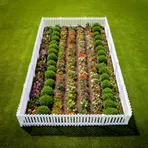
Surround something completely, often with a wall or fence
 70
3.9
70
3.9
To keep something inside so it cannot escape by closing or locking
 34
4.9
34
4.9
To cover something completely so nothing can get in or out
 15
3.7
15
3.7
To bring the edges of something together so there is no gap
 5
8.4
5
8.4
Block an opening to stop the flow of liquid or air
 3
3.7
3
3.7
Close something tightly so nothing can get in or out
 1
4.1
1
4.1
To close a container by putting something in its opening

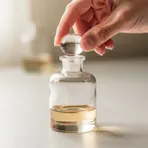
To close a bottle or jar with a small plug

To cover a joint or container with material so it does not leak

Surround something completely on all sides to shut it in

Surround something completely so it cannot get out or move
Antonyms

How Contained

Surface Forms
Morphology
The meaning 'to prevent something from escaping by closing tightly' is directly and transparently derived from combining 'seal' (to make airtight/watertight) with 'in' (inside), so a learner who knows both constituents can infer enclosing something. This verb + particle composition is common in English and has straightforward cross-linguistic equivalents, making it immediately comprehensible to a B1 learner.
Etymology
The verb seal in comes from the image of closing a jar: you seal the lid in place so air, flavor, or moisture cannot escape. So, it means 'to stop something like air, flavor, or moisture from escaping'.