
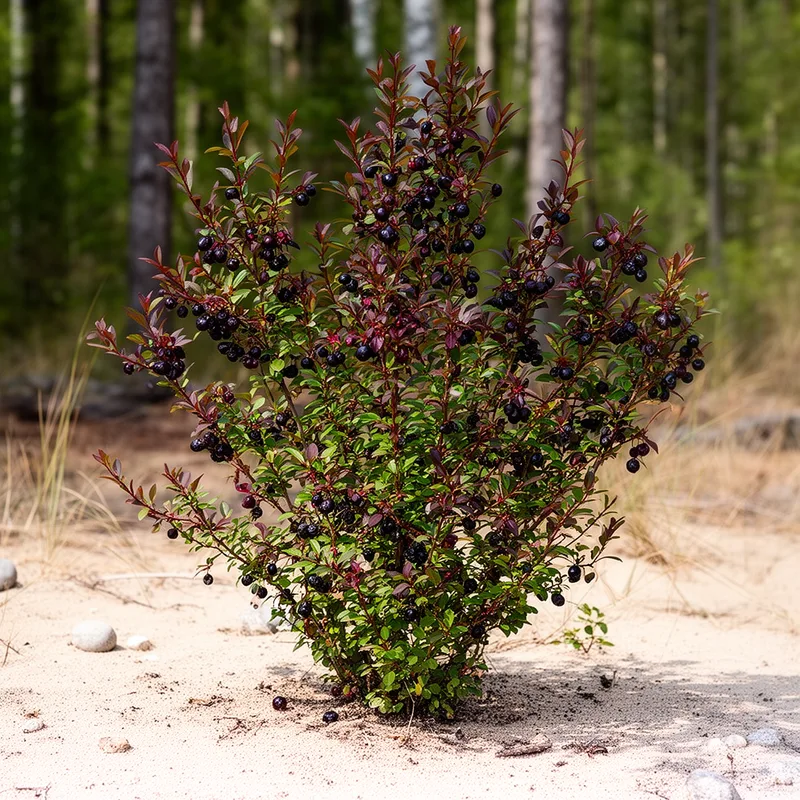
sand cherry
- noun
- /sænd ˈʧɛri/
- US
- The sand cherry thrives in well-drained, sandy soils along the edge of forests.
Examples
-
Although the sand cherry produces fruit, it is generally not considered suitable for eating.
-
Some gardeners plant sand cherry as an ornamental shrub because of its beautiful foliage.
-
The sand cherry is a unique plant.
-
Many birds enjoy eating sand cherries.
-
The sand cherry is known for its small purplish-black fruit that is rarely consumed by humans.
-
In the summer, the sand cherry adds color to gardens with its dark fruit and lush green leaves.
-
The sand cherry grows best in sandy soil, often found in dry areas near forests.
Synonyms

A low North American bush in the cherry family that grows on sandy ground and makes small dark sour fruit

A small wild cherry that grows on sandy soil with tiny bitter dark fruit

A small spreading American cherry that grows on sandy ground and has tiny sour dark fruit
A small wild cherry tree that grows on sandy soil and has tiny dark bitter fruits
Surface Forms
Morphology
The compound 'sand cherry' is transparently built from 'sand' + 'cherry' meaning a cherry/shrub associated with sandy soil; a B1 learner who knows both constituents can infer it refers to a cherry-like plant growing in sand. This noun compounding pattern is straightforward and cross-linguistically common, so the sense is immediately comprehensible without prior exposure.
Etymology
The compound noun sand cherry comes from a simple picture: a small cherry-like plant that grows in sand. Because its tiny dark 'fruit' look like cherries but are not good to eat, the name now means that particular 'shrub' found in sandy soil.

