

Prunus pumila
- noun
- Specialized
- The Prunus pumila grows well in sandy soil and produces small, purplish-black fruit.
Examples
-
The Prunus pumila is often found growing along the sandy shores of the Great Lakes.
-
Gardeners value Prunus pumila for its ability to prevent soil erosion in sandy habitats.
-
Birds sometimes feed on the tiny fruits of Prunus pumila, despite their tart taste.
-
The Prunus pumila is often found in sandy areas.
-
Many gardeners appreciate the Prunus pumila for its unique fruit.
-
Birds sometimes feed on the tiny fruits of Prunus pumila, despite their tart taste.
-
Gardeners value Prunus pumila for its ability to prevent soil erosion in sandy habitats.
Synonyms

A small shrub in North America that grows in sandy soil and has small dark fruit not good to eat

A small wild cherry that grows on sandy soil with tiny bitter dark fruit

A small spreading American cherry that grows on sandy ground and has tiny sour dark fruit
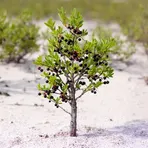
A small wild cherry tree that grows on sandy soil and has tiny dark bitter fruits
How Edible

- Specialized
Surface Forms
Morphology
Prunus + pumila
This is a scientific Latin binomial: 'Prunus' identifies the genus (a tree/shrub) and the epithet 'pumila' would literally mean 'small/dwarf', so if a learner knew both constituents they could compositionally infer 'a small Prunus shrub'. However 'pumila' is not an English word (the entry even shows it as not found) and the name is technical/botanical, so typical B1 learners would not reliably recognise the epithet without specialised or Latin knowledge.
Etymology
Prunus pumila comes from Latin words: Prunus means a plum or cherry and pumila means 'small'. The name gives a simple picture — a tiny, low-growing plum-like shrub — which is why it refers to this small cherry-family plant.

