
Prunus cuneata
- noun
- Specialized
- Few people eat the tiny fruits of Prunus cuneata because they are almost inedible.
Examples
-
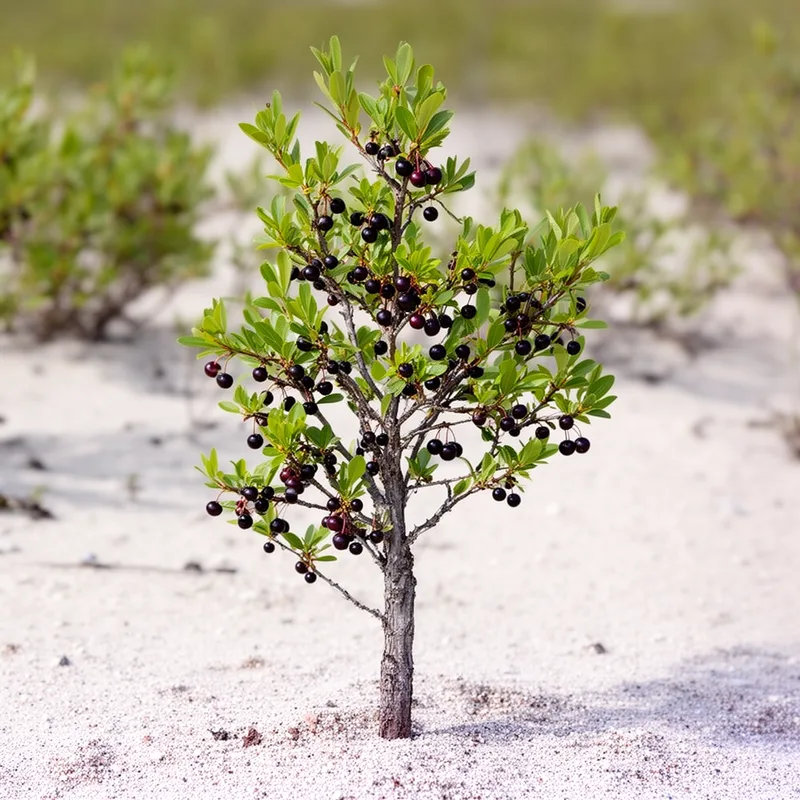
Prunus cuneata thrives best in sandy soils where many other cherry species would not survive.
-
The botanist identified the shrubby plant as Prunus cuneata during his field research.
-
The Prunus cuneata tree is known for its unique shape.
-
Many gardeners appreciate the Prunus cuneata for its resilience.
-
The tiny, purplish-black fruits of Prunus cuneata are often too sour for most people's taste.
-
In the wild, Prunus cuneata can often be found growing among other hardy plants in sandy areas.
-
Gardeners often choose Prunus cuneata for its ability to thrive in poor soil conditions.
Synonyms

A low North American bush in the cherry family that grows on sandy ground and makes small dark sour fruit

A small wild cherry that grows on sandy soil with tiny bitter dark fruit

A small spreading American cherry that grows on sandy ground and has tiny sour dark fruit

A small shrub in North America that grows in sandy soil and has small dark fruit not good to eat
Surface Forms
Morphology
Prunus + cuneata
This is a Latin binomial: 'Prunus' names the genus (trees/shrubs, so a type of tree) and the second element is an epithet; if a learner knew both constituents they could infer it denotes a species of Prunus (i.e. a kind of tree). However, the specific descriptive details in the definition (small, American, sandy-soil habit, purplish-black barely edible fruit) are specialized and not predictable from the constituents alone, and the epithet 'cuneata' is a Latin form unfamiliar to most learners, so only the taxonomic class is transparent.
Etymology
Prunus cuneata comes from Latin words that describe the plant. Prunus means 'plum' and cuneata means 'wedge-shaped', probably referring to the shape of the leaves, so the name helps you remember this small cherry with tiny, dark fruit.

