

rudaceous


 1
9.9
1
9.9
- adjective
- /ruˈdeɪʃəs/
- Specialized
- Many rudaceous deposits are found in mountainous regions.
Examples
-
The museum displayed a sample of rudaceous rock collected from the mountain valley.
-
The geologist identified the layer as rudaceous because of its large, angular rock fragments.
-
A rudaceous deposit often forms at the base of steep slopes where rocks break apart.
-
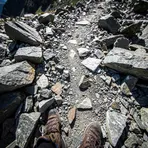
The rudaceous terrain made hiking quite difficult.
-
The geologist examined the rudaceous outcrop to understand the area's geological history.
-
These rudaceous deposits are common in riverbeds and indicate high-energy environments.
-
During the hike, we encountered a rudaceous terrain filled with large rocks and gravel.
Synonyms
 63
1.0
63
1.0
Land that has many rocks or stones
 7
2.7
7
2.7
Ground that is full of rocks
 1
3.9
1
3.9
Covered with many small stones that crunch underfoot
 1
3.2
1
3.2
Covered with many small round stones

Covered with loose stones and broken pieces of rock

Rock that is made of loose small pieces like sand

A rough texture made of large visible grains

Having many large rocks on the surface

A place that is covered with many large rounded rocks
Compounds

- Specialized
A rock made of large pieces of other rocks and minerals that you can see
How Coarse

Surface Forms
Morphology
rudaceous = rud + aceous
Although the word contains the recognizable adjective suffix -aceous, its Latin-based root is not a common English word, so most learners will not be able to infer the geological meaning from the parts.
Etymology
The word rudaceous comes from the Latin part rud- meaning 'rubble' or 'rough', and is like the English word rubble. So rudaceous describes rocks made of large, broken pieces.