
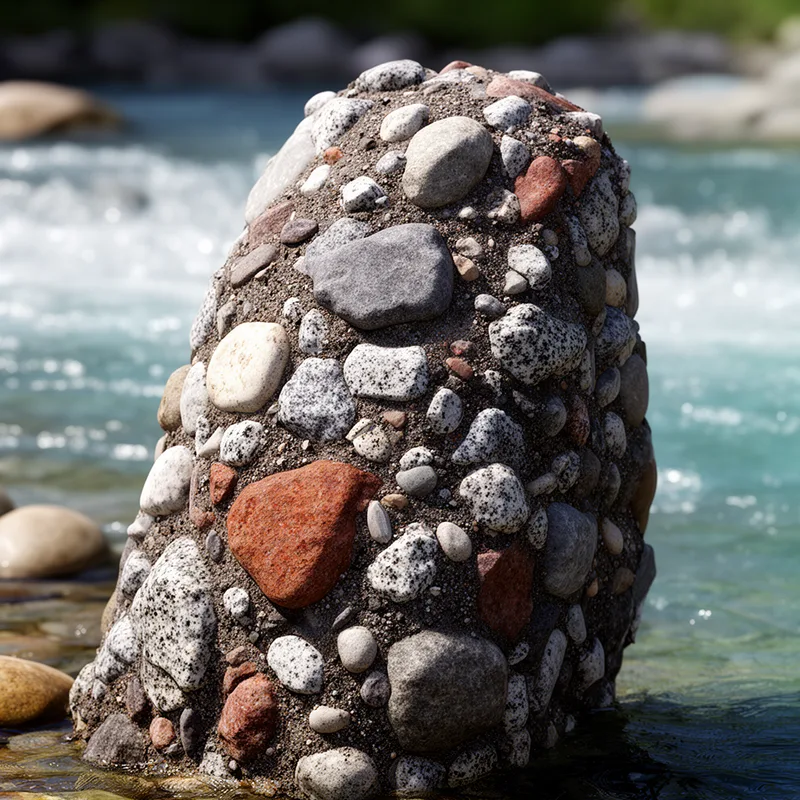
rudaceous rock
- noun
- /ˈruːdeɪəs rɑk/
- Specialized
- Coarse fragments in a rudaceous rock can sometimes be identified with the naked eye.
Examples
-
The geologists found a layer of rudaceous rock beneath the riverbed.
-
A rudaceous rock is formed when coarse materials settle in fast-moving water.
-
A rudaceous rock is typically formed in environments with strong water currents, like rivers or beaches.
-
The rudaceous rock was found near the riverbank.
-
Many rudaceous rocks can be seen in the canyon.
-
Geologists study rudaceous rock to understand sediment transport in river systems.
-
The construction site revealed rudaceous rock rich in large gravel fragments.
Synonyms
 3
3.5
3
3.5

Rock made from layers of sand, mud, or broken shells
How Coarse
- Specialized
1
8.2

- Specialized
- Specialized
18
3.3
- Specialized

 1
7.3
1
7.3
- Specialized
1
5.5
Surface Forms
Morphology
The meaning 'a rock consisting of coarse-grained material' is directly derivable by combining 'rudaceous' (referring to coarse rubble) with 'rock' (natural solid mineral material). This follows the standard adjective + noun compositional pattern in English, so a B1 learner who knows both constituents would understand the phrase. Although 'rudaceous' is a technical and low-frequency adjective, its contribution to meaning is literal and predictable.
Etymology
Rudaceous rock comes from a word for broken stones and paints a simple picture: a rock made of many big, rough pieces. So rudaceous means 'rubble' and the phrase means a rock made of 'coarse' or very large pieces.