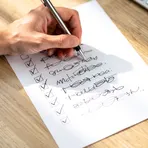
to put a full stop

to put a full stop

1 3.6
End something completely so it does not continue
  • phrasal verb
  • UK
: poner fin
  • It's a really simple, clear messages that just would help kind of almost just put a full stop to my week of preparation.

It's a really simple, clear messages that just would help kind of almost just put a full stop to my week of preparation.

Examples

  • After several debates, they agreed to put a full stop to all discussions about the merger.

  • To avoid further conflict, it is best to put a full stop to this argument right now.

  • The manager decided to put a full stop to the ongoing project due to budget issues.

Synonyms

to stop
vsto put a full stop
∞ 1.0

To make something end and not continue

focuses on full cessation as the main idea
to end
vsto put a full stop
∞ 1.0

To stop something or make it finish
is the same idea of complete and total ending
to finish
vsto put a full stop
∞ 1.0

To bring something to an end or complete it

stresses absolute stopping rather than merely finishing a task
to break
vsto put a full stop
∞ 1.0

To stop an activity or end a habit

leans more toward a complete end in a single, definite sense
to quit
vsto put a full stop
∞ 1.0

To stop doing a habit or activity like smoking

is about total cessation of an action or event itself
to cut off
vsto put a full stop
601 3.8

To stop something suddenly before it is finished

means a full stop rather than only an interruption
to cease
vsto put a full stop
440 3.6

To stop or come to an end

emphasizes the full, absolute cessation rather than partial stopping
to finish up
vsto put a full stop
244 2.0

To complete an activity or task

focuses more on total stopping of any continuation rather than task end
to shut off
vsto put a full stop
197 2.6

Stop something from working by using a switch or valve

covers complete cessation more generally, not only mechanical control
to halt
vsto put a full stop
178 2.4

To stop moving or make something stop moving

highlights absolute cessation rather than only temporary pause
to cut it
vsto put a full stop
  • Informal
156 7.2

Stop doing something annoying when someone tells you

describes full ending as an overall state rather than a command
to suppress
vsto put a full stop
151 4.8

To stop public protest by force or by people in power
is similar but focuses on ending without force or authority
to terminate
vsto put a full stop
151 4.6

To make something stop or finish

is the general notion of complete stopping without formal tone
to call it
vsto put a full stop
  • Informal
140 4.7

Decide to stop an activity and finish for now

emphasizes absolute cessation regardless of who decides it
to put an end to
vsto put a full stop
129 3.0

To make something stop completely

uses the same finality but in a shorter everyday way
to break off
vsto put a full stop
128 3.2

To stop something suddenly before it is finished, for example a talk or relationship

is the fuller idea of complete ending, not only sudden breaks
to leave off
vsto put a full stop
  • Informal
93 4.1

Stop doing something for a short time, for example at a point in a book

implies a complete, permanent stop rather than a temporary pause
to pull the plug
vsto put a full stop
78 5.5

To stop something from going on by removing support like money

is the general act of ending without implying withdrawal of support
to put a stop to
vsto put a full stop
58 3.0

To end something so it no longer happens

expresses the same absolute stopping as the key concept
to discontinue
vsto put a full stop
48 4.2

To stop something that is happening or being given

covers full ending more generally, not only stopping provision
to call it quits
vsto put a full stop
  • Informal
36 3.9

To stop doing something because you cannot continue or feel you have done enough

is about ending fully without implying personal decision or exhaustion
to wind up
vsto put a full stop
30 3.7

Bring an activity or meeting to an end

is similar but implies a firmer, complete cessation
to come to a halt
vsto put a full stop
  • Informal
25 3.4

Stop moving or working completely

applies more broadly to full ending beyond physical movement
to come to a close
vsto put a full stop
22 3.5

To end, often after a meeting or event

puts more weight on complete stopping at any moment
to put to bed
vsto put a full stop
21 4.7

Finish something completely so no more work is needed

focuses more narrowly on outright ending with no continuation
to close the book on
vsto put a full stop
  • Informal
7 5.3

Decide that a matter has ended and do nothing more about it

matches full ending but focuses on the decision to stop further work
to put paid to
vsto put a full stop
  • UK
1 7.7

To stop plans or activities from happening

is the straightforward idea of complete stopping without nuance
to terminate the session
vsto put a full stop
  • Specialized
1 5.8

End a computer or website connection when you finish using it

is the same total stopping but without the technical context
to wind off
vsto put a full stop
1 6.8

To unroll something or slowly finish a task

means immediate and total cessation rather than gradual finishing
to call a lid
vsto put a full stop
  • UK
8.4

To stop a meeting or discussion

is the plain idea of full stopping without rule-based nuance

Antonyms

∞ 1.0

To begin an action, event or process

∞ 1.0

To keep doing something without stopping

How Final

to terminate
151 4.6
to end
∞ 1.0
to put a full stop
  • UK
1 3.6
to stop
∞ 1.0
to halt
178 2.4
to pause
336 1.0

Surface Forms

put a full stop infinitive
put a full stop past participle
putting a full stop present participle
puts a full stop third person singular

Morphology

put + a + full + stop

The sense is directly compositional: 'put' (place/bring into a state) + 'full' (complete) + 'stop' (cessation) yields 'bring to a complete end', so a learner who knows the constituents can infer the meaning. The construction is a straightforward metaphor (place a complete stop) with clear cross-linguistic parallels, though the exact wording ('full stop') is more British, it remains predictable for a B1 learner.

Etymology

Put a full stop comes from writing: when you finish a sentence you add a dot called a full stop, which closes the thought. So to put a full stop to something means 'to end' it completely.