

poplar tree
 2
3.0
2
3.0

- noun
- /ˈpɑːplər triː/
- An old-growth poplar tree stands in Lilley Cornett Woods, Letcher County, Kentucky.
- a tall poplar tree
- a tulip poplar tree
Loading YouTube…
Watch on YouTubeStrange fruit hanging from the Poplar trees.
- Strange fruit hanging from the Poplar trees.
- Strange fruit, blood on the leaves, blood at the root, black bodies swinging the southern brain, strange fruit hanging in front of Poplar trees.
Examples
-
He took a cigarette from his pocket, lit it, and stood for a moment looking at the silver poplar tree.
Fiction book (2000) -
The fields in Dieppe are lined with poplar trees.
-
Jimmy climbed the poplar tree in the backyard.
Fiction book (1998) -
Margaret sat on the bench next to my exhibit under the crown of the poplar tree.
Fiction book (2001) -
The fields in Dieppe are lined with poplar trees.
-
Behind the house on the north, a row of tall poplar trees had been planted for a windbreak.
Fiction book (1993) -
Delighted, Jada walked over to the windows and looked out at more flowers and a long expanse of lawn, reaching the tall poplar trees in the distance.
Fiction book (1993) -
As we settled in, the sun crept below the poplar trees.
-
Cady drove a mile up a long winding road that was lined with poplar trees.
Synonyms
 9
4.4
9
4.4
A tall tree with light wood and small hanging flowers that grows in cool areas


 1
6.3
1
6.3
A tall poplar tree with large round leaves and dark bark that grows in North America

A group of trees like poplars and aspens that lose their leaves in winter
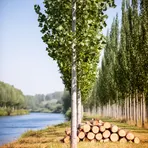
A fast-growing poplar tree with broad leaves often planted near rivers for timber
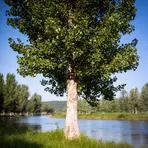
A large fast-growing tree with broad leaves that often grows along rivers
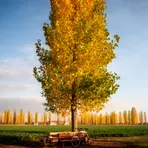
A fast-growing tree with large leaves grown for wood and shade

A poplar tree with broad heart-shaped leaves and sticky buds that have a strong smell
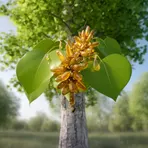
A tree with broad heart-shaped leaves and sticky buds that smell sweet
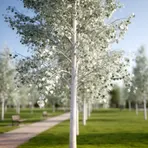
A poplar tree with white bark and pale leaf undersides
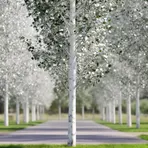
A tall tree with white bark and silvery leaf undersides used for decoration
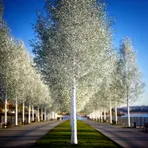
A tree with white bark and silvery leaves often planted for decoration

A tall tree with leaves green on top and gray underneath
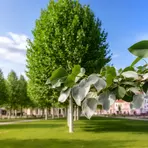
A large fast-growing poplar tree with leaves grey underneath native to Europe
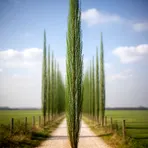
A tall, thin tree with branches that grow straight up

A tall narrow tree with branches that grow straight up often used in gardens

A large tree found in Europe with dark wood and deep furrows in its bark
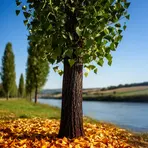
A large tree from Europe and western Asia that loses its leaves and has dark bark with triangular leaves
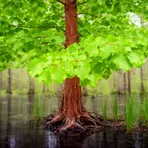
A North American poplar tree with large leaves with wavy edges and brown bark often found in swamps

A poplar tree from North America with large soft rounded leaves with wavy edges and brown bark

A tree that grows in wet places like rivers and marshes with large rounded leaves and brown bark
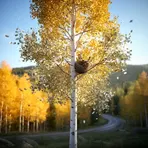
A tree with smooth white bark and leaves with pale undersides that tremble

A poplar tree with large, toothed leaves and a narrow crown

A tree with large leaves that have rough edges and a narrow top

A tree from Europe and parts of Asia with rounded leaves that shake in the wind
How Tall

Surface Forms
Morphology
The compound simply names a type of tree and its meaning is directly derivable from 'poplar' (a fast‑growing tree) + 'tree' (a tall perennial plant); there is no idiomatic shift. This taxonomic noun–noun composition is a common, productive pattern in English (and many languages), so a B1 learner who knows both constituents will understand it.
Etymology
Poplar tree comes from the old word poplar, which comes from the Latin 'populus' meaning 'people', because these tall trees were often planted in towns and along roads where many people saw them. That's why the name came to mean this common, tall tree.