
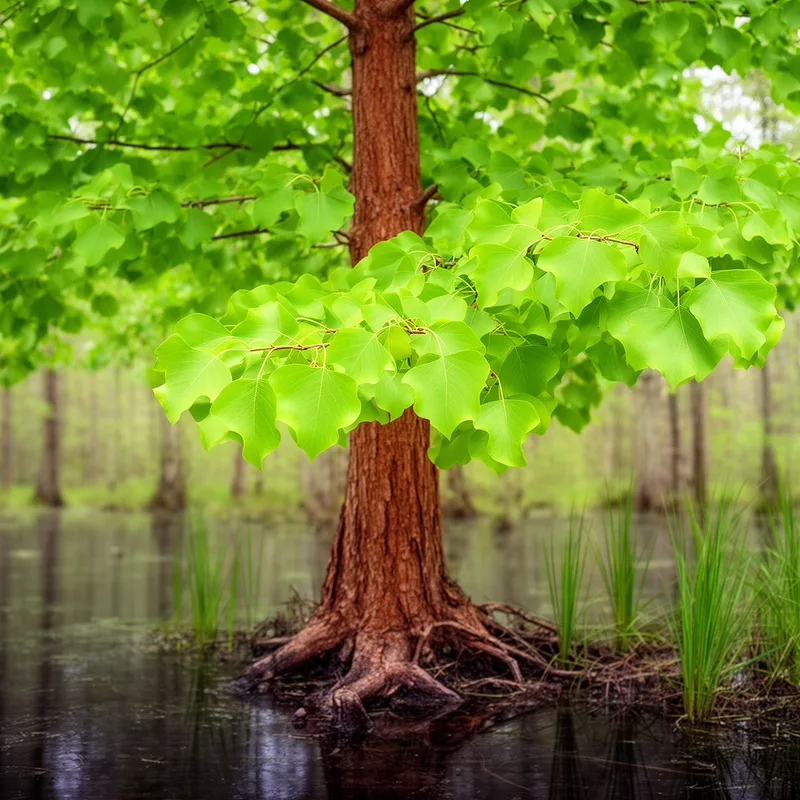
Populus heterophylla
- noun
- Specialized
- Botanists identified the specimen as Populus heterophylla based on its distinctive leaves and bark.
Examples
-
The large scalloped leaves of the Populus heterophylla make it easily identifiable in its natural habitat.
-
The Populus heterophylla thrives in wet lowland woods and swamps across parts of the eastern United States.
-
Many animals use the branches of Populus heterophylla for shelter during the rainy season.
-
The Populus heterophylla thrives in wetland areas.
-
Have you seen the Populus heterophylla near the river?
-
The Populus heterophylla is commonly found growing along riverbanks in the southeastern United States.
-
In wetland ecosystems, the Populus heterophylla provides vital habitat for various bird species.
Synonyms

A tall tree with large round leaves that grows in wet places

A tree that grows in wet places like rivers and marshes with large rounded leaves and brown bark

A poplar tree from North America with large soft rounded leaves with wavy edges and brown bark
How Moisture-Tolerant
 1
3.4
1
3.4


- US
- Specialized
1
1.0
- Specialized
Surface Forms
Morphology
Populus + heterophylla
The binomial combines Populus (the poplar genus) with heterophylla (from Greek roots hetero- 'different' + phylla 'leaves'), so a learner who recognises these elements can infer it is a type of poplar distinguished by its leaves. However, as a technical Latin species name it is specialized and may not convey the precise common name, habitat or features to a B1 learner, and the classical roots may be unfamiliar, making the meaning only partially predictable.
Etymology
Populus heterophylla comes from Latin: Populus means poplar and heterophylla means 'different leaves', because this tree often has leaves of different shapes and wavy edges. So the name tells you it is a poplar with unusual leaves that commonly grows in wet woods and swamps.