
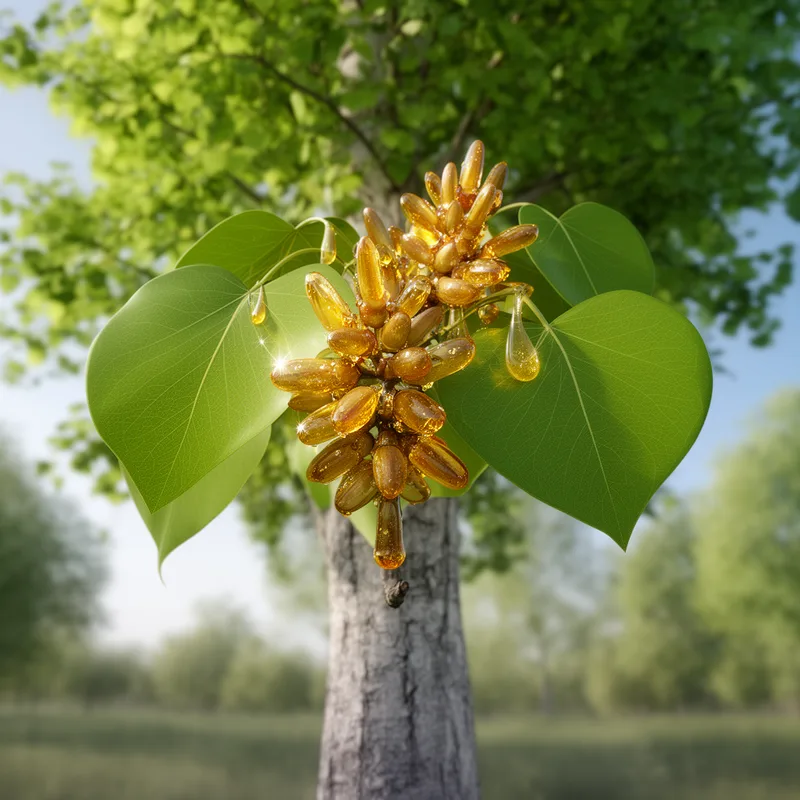
balsam poplar
- noun
- /ˈbɔːlsəm ˈpɑːpələr/
- US
- The balsam poplar is easily recognized by its glossy, heart-shaped leaves.
Examples
-
In spring, sticky resin from the balsam poplar buds fills the air with a sweet scent.
-
Loggers often use wood from the balsam poplar for pulp and construction.
-
The balsam poplar tree grows near rivers.
-
Many balsam poplars can be found in Canada.
-
The balsam poplar is easily recognized by its broad, heart-shaped leaves and aromatic buds.
-
In northeastern North America, the balsam poplar thrives in wetland areas, providing habitat for various wildlife.
-
The resinous buds of the balsam poplar release a pleasant fragrance in the spring.
Synonyms

A poplar tree with broad heart-shaped leaves and sticky buds that have a strong smell
A tall tree with broad heart-shaped leaves like a balsam poplar
A type of poplar tree with broad heart-shaped leaves that grows in northeast North America
Surface Forms
Morphology
This is a straightforward noun–noun compound: a B1 learner who knows 'balsam' (an aromatic/resinous substance) and 'poplar' (a type of tree) can infer it denotes a poplar tree characterized by balsam/resinous buds. The meaning is directly compositional and follows common compounding patterns across languages, so it is predictable from the parts.
Etymology
The tree balsam poplar gets its name from the sticky, sweet-smelling buds on its branches: people called that sticky sap balsam and the plant is a poplar. So the name simply points to a poplar tree with scented, sticky buds, which explains why the tree is known for its strong sweet smell.

