
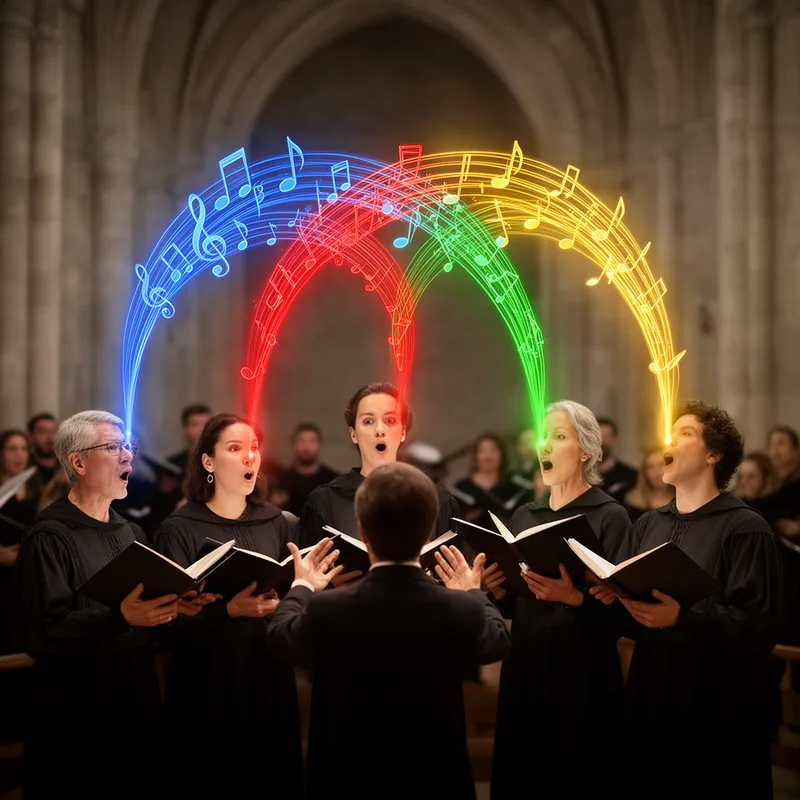
polyphonic music
- noun
- /ˌpɒliˈfɒnɪk ˈmjuːzɪk/
- Specialized
- Europe isn't the only place to find fascinating polyphonic music; a number of Asian cultures use this technique in various forms.
Examples
-
The concert showcased a variety of polyphonic music, highlighting how different cultures develop their own intricate melodic structures.
-
Many composers throughout history have embraced polyphonic music, using multiple melodies to create rich harmonies.
-
And in answer to your last question, there is still some polyphonic music around.
Blog text (32) -
Also, the Holy Father urged them not to be afraid of the treasury of the Church's sacred music, especially Gregorian chant and polyphonic music.
Blog text (32) -
After students can sing polyphonic music using the same melody for each voice, they can learn to sing contrasting melodies, which include countermelodies and descants.
Academic text (1997) -
In order to create a vehicle for assessing the effect of texture on error detection skills, half of the excerpts in each set were played by a single instrument section playing in unison, and the other half were played by the full ensemble performing polyphonic music.
Academic text (2011) -
And indeed the hallmark of his playing style, as he continued to produce it in the complete privacy of the recording studios that he inhabited late at night, was first of all that it communicated a sense of rational coherence and systematic sense, and second, that for that purpose it focused on performing Bach's polyphonic music as embodying that ideal.
Academic text (2000) -
In choir practice, we often sing polyphonic music that features independent melodic lines for each voice part.
Synonyms

 1
8.6
1
8.6

Music with several different melodies heard at the same time

Music for several singers or players, each with a different part
Antonyms

How Polyphonic


Surface Forms
Morphology
The adjective 'polyphonic' (many-voiced/multiple simultaneous sounds) combined with 'music' directly yields the meaning 'music with multiple independent melodic lines.' This is a straightforward compositional adjective+noun pattern and is cross-linguistically transparent, so a learner who knows both words can infer the MWE meaning.
Etymology
Polyphonic music comes from Greek words poly meaning 'many' and phonic meaning 'sound', so it gives the image of many voices. Imagine several singers or instruments each playing a different tune at the same time, so it means music with two or more separate melodies played or sung together.