

polyphonic
 2
7.2
2
7.2

- adjective
- /ˌpɒliˈfɒnɪk/
- Specialized
- Techniques of polyphonic singing include canonic imitation, drone, and counterpoint.
- polyphonic singing
- polyphonic music
- polyphonic texture
Examples
-
In the mid-1500s, Miguel Fuenllana published the first book of polyphonic art music for the guitar.
Academic text (1998) -
Have students combine two or more of the warm-ups into a 2-4 part polyphonic exercise.
Academic text (2001) -
And in answer to your last question, there is still some polyphonic music around.
Blog text (32) -
Europe isn't the only place to find fascinating polyphonic music; a number of Asian cultures use this technique in various forms.
Academic text (2015) -
The choir performed a polyphonic arrangement that showcased the beauty of multiple voices harmonizing together.
-
During the music class, we learned about polyphonic compositions that feature intertwining melodies.
-
Many traditional folk songs from around the world are polyphonic, allowing for a rich tapestry of sounds.
Synonyms
 2
9.6
2
9.6
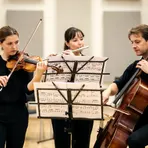
Music that has two or more separate melodies played together

Two or more separate melodies sound together
Antonyms

Compounds


- Specialized
Music with two or more separate melody lines sounding at the same time

How Polyphonic
- Specialized
2
9.6

- Specialized
2
7.2

 1
4.3
28
3.4
1
4.3
28
3.4
- Specialized
Surface Forms
Morphology
polyphonic = phonic (semi-transparent) = poly + phon + ic
The form is clear, but the musical sense of multiple independent melodic lines is a specialized extension rather than an everyday composition.
Etymology
Polyphonic comes from the Greek parts poly- ('many') and -phonic ('sound'), so it literally means 'many sounds'. In music, a polyphonic piece has several separate melody lines or voices sounding at the same time, which is why we call it 'many sounds' together.