
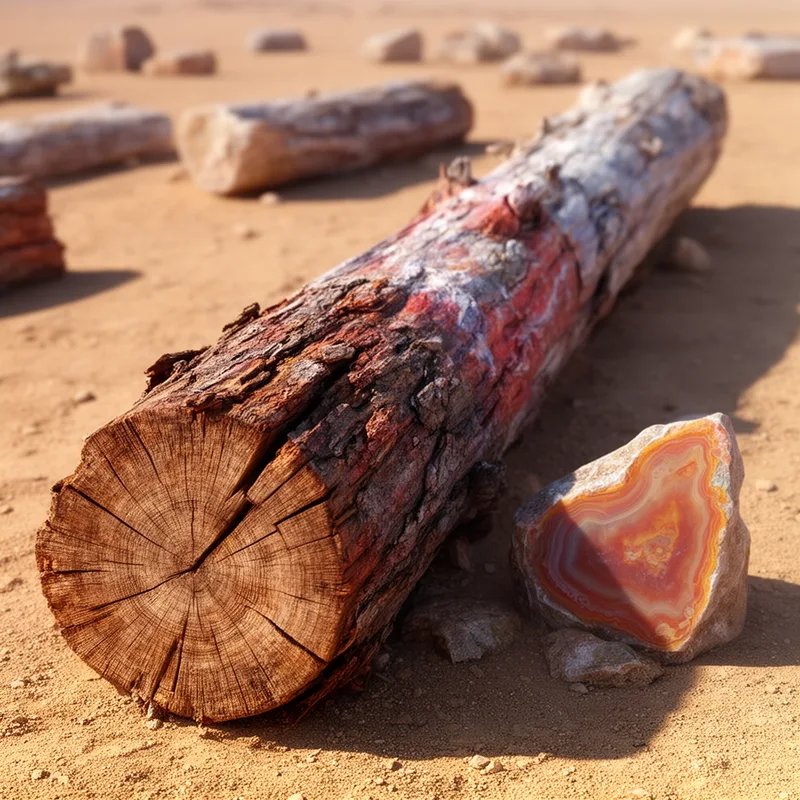
petrifaction
- noun
- /ˌpɛtrɪˈfækʃən/
- Specialized
- Scientists study petrifications to learn about the Earth's geological history and ancient ecosystems.
Examples
-
There was a petrifaction spoof in the newspaper Alta California in 1858.
Academic text (2005) -
By the time an expert arrived to examine the petrifaction, it had disappeared.
Academic text (2005) -
Hull was not, in fact, the originator of the petrifaction idea.
Academic text (2005) -
The petrifaction process preserves ancient trees, turning them into beautiful stone formations.
-
Petrifaction can occur over millions of years, resulting in stunning fossilized remains of plants.
Synonyms
 1
9.8
1
9.8

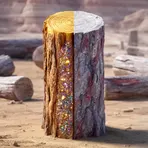
A process where wood or other plants slowly turn into stone while keeping their shape


 1
6.8
1
6.8
The slow change of a dead plant or animal into rock over many years
A process where minerals replace parts of dead animals or plants and keep their shape

Natural changes that turn dead plants or animals into rock-like remains
How Fossilized

Surface Forms
Morphology
petrifaction = petrify (semi-transparent) = petr + ify + action
The noun is formed from the verb 'petrify' in a fairly regular way, but the classical stem makes the spelling and meaning less immediately obvious.
Etymology
Petrifaction comes from the roots petra ('rock') and -fication ('making') and is like the word petrify ('to turn to stone'). So, petrifaction means the slow process of 'making into rock', as when wood becomes stone over many years.