

to petrify
 1
7.4
1
7.4

- verb
- /ˈpɛtrɪˌfaɪ/
- Specialized
- The heat from the volcanic eruption petrified the nearby trees, turning them into stone over thousands of years.
- petrified wood
Loading YouTube…
Watch on YouTubeThey wear it in their hair, and they use arrows, and that poison can petrify you, and they'll drag you off and they'll do things to you.
- They wear it in their hair, and they use arrows, and that poison can petrify you, and they'll drag you off and they'll do things to you.
Examples
-
But still the milk came, then petrified in Alice's breasts.
Fiction book (1998) -
They wear it in their hair, and they use arrows, and that poison can petrify you, and they'll drag you off and they'll do things to you.
-
Some were so ancient that they had petrified.
Blog text (1) -
That there is King Fingal, king of the giants, petrified in the sun.
-
There's enough coo-coo berry resin in there to petrify a brontosaurus.
Fiction book (1994) -
The ancient forest was full of petrified wood, evidence of a time when it thrived in a lush environment.
-
Scientists discovered that the dinosaur bones had petrified, preserving them as fascinating artifacts for future study.
Synonyms
 9
6.0
9
6.0
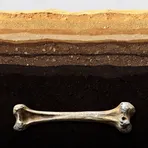
Change into a fossil over a long time
 3
7.4
3
7.4
Become hard and stony because minerals, especially calcium, build up

To change into stone

To turn into solid rock over time

To turn something into a hard, glass-like rock that keeps its shape

To become hard as minerals collect inside things like bones
How Solid

Surface Forms
Morphology
petrify = petr + ify
The literal sense 'to turn to stone' directly reflects the pattern 'X + -ify = make X', but because the root 'petr-' (stone) is a combining form not known as a standalone English word, the morphological meaning is only partially accessible to learners.
Etymology
Petrify comes from the Greek word petra meaning 'rock', and it originally meant to 'turn into stone', as when wood slowly becomes stone over many years. So the scientific meaning of organic matter becoming stone is the original, literal sense.