
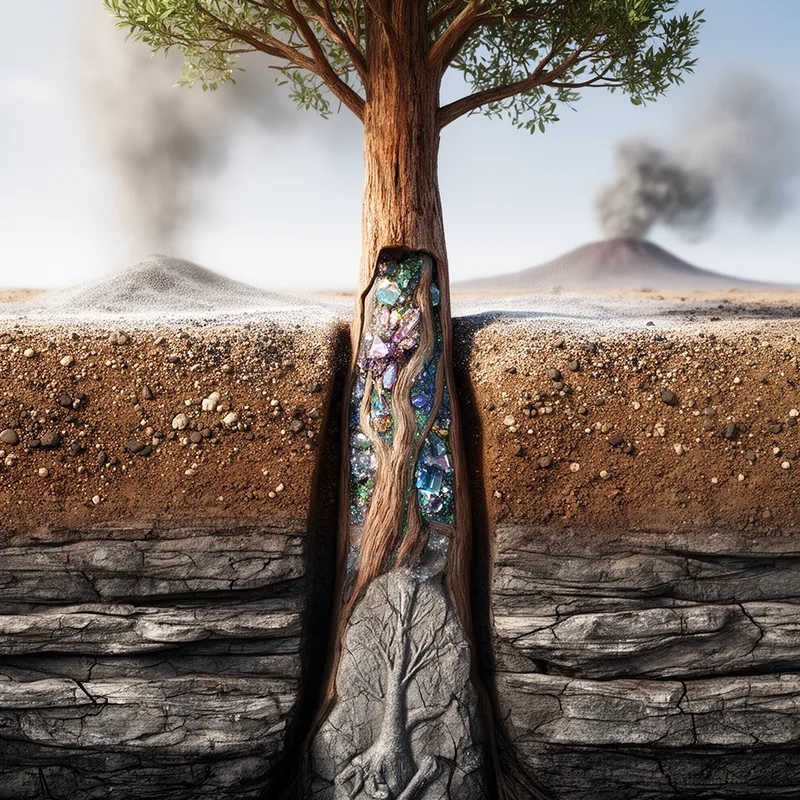
to lithify
- verb
- /ˈlɪθɪfaɪ/
- Specialized
- Over time, the sediments around your fossil will lithify or turn into rock, but you're not in the clear yet.
Examples
-
The heat and pressure deep underground can lithify the sediments into solid rock over millions of years.
-
Sedimentary layers that lithify over time provide important clues about Earth's history.
-
The only point I'd like to expand on is the general misperception of the movement of fluids in porous media such as sediments and lithified rock.
Blog text (30) -
Great Basin imagery has been instrumental in promoting Yucca Mountain, a ridge of lithified volcanic ash located some 100 miles northwest of Las Vegas, as an ideal site at which to entomb the nation.
Academic text (2005) -
During the geological process, organic materials can lithify and create fossilized remains.
Synonyms
 55
4.4
55
4.4

To change from a liquid or gas into a hard state as it cools
 1
7.4
1
7.4
To change something into stone over a long time

To change into stone

To become hard as minerals collect inside things like bones
How Solid

Surface Forms
Morphology
lithify = lithic (transparent) = lith + ify
The verb is a straightforward combination of the stem meaning 'stone' (lith-) and the verb-forming suffix '-ify' meaning 'make', yielding 'turn into stone'.
Etymology
Lithify comes from the Greek root lith- meaning 'stone' and is the same root in monolith, which means 'one big stone'. To remember it, think of soft sand or mud slowly turning into hard rock, so to lithify is to turn something into stone or solid rock.