
lithic
 1
9.9
1
9.9

- adjective
- /ˈlɪθɪk/
- Specialized
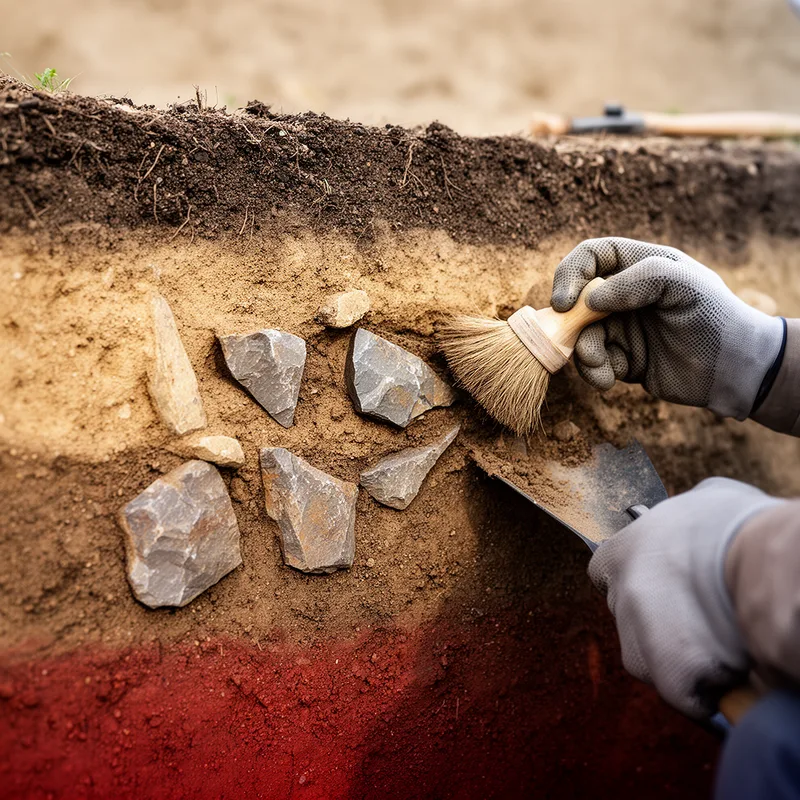
- Artifacts made from stone, known as lithic items, provide essential insights into ancient cultures.
Examples
-
Both had abundant faunal remains and lithic material found in the area—precisely what one would expect of a hunter-gatherer site.
Academic text (2005) -
Yet Aberdeen balances its lithic representations.
Blog text (16) -
We also have lithic instruments made some rocks such as stalactites or the famous rock gongs in Tanzania.
-
But the enormous quantities of native chert, including used tools that have been resharpened or retooled, make it clear that the site was also a major lithic workshop—one either occupied permanently or repeatedly for long periods.
Academic text (2006) -
The archaeological team uncovered numerous lithic tools that were used by early humans.
-
Researchers are studying the lithic remains found at the site to better understand prehistoric tool-making techniques.
Synonyms
About what rocks are made of and how they look
About the physical type and what rocks are made of
Surface Forms
Morphology
lithic = lith + ic
The root 'lith' is a Greek combining form meaning 'stone' and is not a standalone English word, so learners who know common English vocabulary are unlikely to infer the meaning from components.
Etymology
Lithic comes from the old Greek root lithos, which means 'stone', and you can see the same root in monolith, a single large 'stone'. So lithic describes things made of or related to 'stone', like stone tools or stone layers in archaeology.