
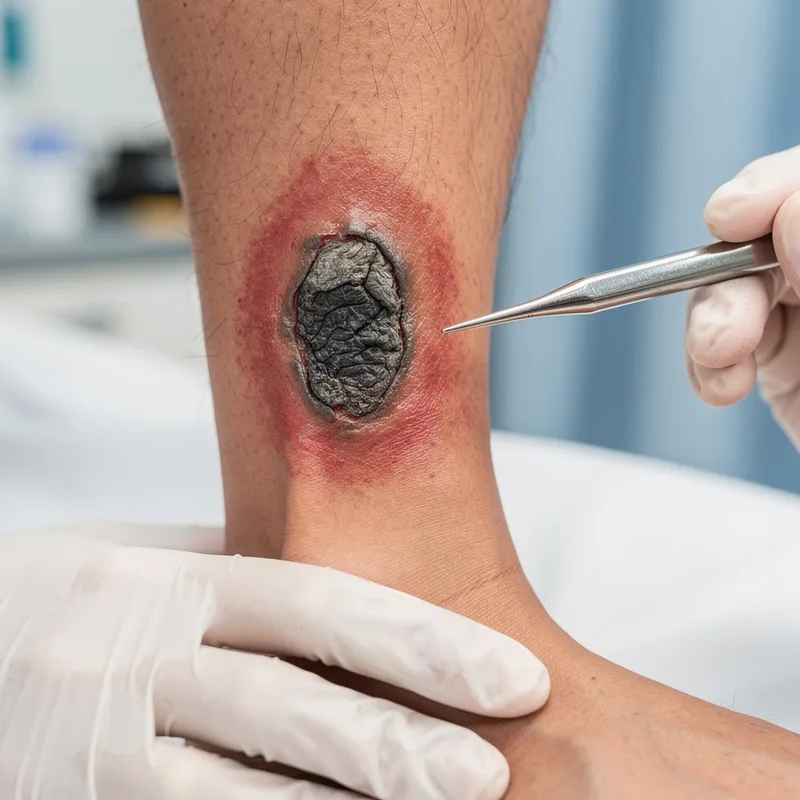
to necrotize
 3
9.8
3
9.8

- verb
- /ˈnɛkrəˌtaɪz/
- Specialized
- necrotizing fasciitis
Loading YouTube…
Watch on YouTubeThese are prolonged antibiotics at birth beyond the five days are associated with the development of necrotizing enterocolitis over the next couple months.
- These are prolonged antibiotics at birth beyond the five days are associated with the development of necrotizing enterocolitis over the next couple months.
Examples
-
Oh, and it was because she had necrotizing gastritis.
Blog text (9) -
Then Margaret got necrotizing fasciitis and they had to cut off her arm.
Fiction book (2000) -
Necrotizing fasciitis was first described during the American Civil War by Joseph Jones, a Confederate Army doctor.
Academic text (2010) -
Cellulitis will respond to medical intervention alone, but necrotizing fasciitis requires surgical debridement.
Academic text (2004) -
Necrotizing fasciitis is a fulminant soft-tissue infection that occurs most frequently in the extremities, abdomen, and perineum.
Academic text (2004) -
If not treated, necrotize can lead to serious complications, including the loss of limbs.
-
Doctors warn that untreated infections can cause tissue to necrotize, resulting in severe health risks.
-
In cases of severe injury, the affected area may necrotize and require immediate medical attention.
Synonyms


 1
9.9
1
9.9
To die because it loses blood or gets a serious infection

To die and decay because of injury or disease
Antonyms


How Damaging

Surface Forms
Morphology
Etymology
Necrotize starts with the Greek part necro- meaning 'dead' and ends with -ize meaning 'to make'. So necrotize literally means 'to make dead', which is why doctors use it for wounds or infections that cause body tissue to die.