

to irritate
 17
3.4
17
3.4

- verb
- /ˈɪrɪˌteɪt/
- If you have allergies, pollen can irritate your eyes and make them water.
- irritate the stomach lining
- irritate the eyes
- irritate the stomach
Loading YouTube…
Watch on YouTubeIt doesn't irritate the eyes whatsoever.
- It doesn't irritate the eyes whatsoever.
- I have struggled to find a product that does not irritate my skin.
- If you get this in your eyes, it's going to hurt you will irritate your eyes.
- It's like a nice light, healthy peel and also stuff that's not really going to irritate my skin.
- Now people in the community may be doing using very low doses of CBD and things that may not irritate your liver.
- So now you see that that will trigger off and irritate all sorts of tissues at that very specific level and not others.
- And if you scrub it and irritate it with chemicals, even if they're for acne, then you risk irritating the skin and that can lead to even more acne.
- Some of the toxins are acrid, you know, meaning like they'll irritate your eyes.
- No, I actually took like, at least five weeks off because I went to my cousin's wedding and I wore these platform shoes and my calf got irritated because you shouldn't.
Examples
-
As you can see, this does not irritate my eyes or conflict with my contacts.
-
If you see that your skin is getting irritated, then reduce the frequency of exfoliation.
Blog text (29) -
So this is an old favorite and it just is so smooth, does not irritate my skin.
-
Well, sometimes these hotel soaps irritate my skin.
-
Watch your alcohol intake because it can irritate the stomach lining.
Academic text (2006) -
I'll just pray that it doesn't irritate my eyes.
-
You should try to avoid breathing it in, as it will irritate the respiratory tract.
Blog text (18) -
Our patients reported that the use of the intranasal sensor was pleasant and did not irritate the nostrils.
Academic text (2004) -
Carmen in Cedar Rapids, IA, says I have struggled to find a product that does not irritate my skin.
-
Multi blade razors are known to irritate curly textured beards.
Synonyms
 706
1.8
706
1.8
To feel a hot, stinging pain after heat or chemicals
 13
5.3
13
5.3
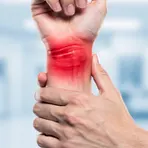
To make part of the body red, swollen, and painful

To make a part of the body red, swollen, or painful
Antonyms


How Irritating

Surface Forms
Morphology
irritate = irritant (opaque) = irrit + ate
The verb is formed from a non-productive Latin-derived root plus '-ate'; learners cannot reliably derive the meaning from the visible parts.
Etymology
Irritate comes from the Latin irritare, which meant 'to excite' or 'provoke'. So, when something irritates your skin or eyes it 'excites' the nerves and makes them sore or uncomfortable.