

melolonthid beetle
- noun
- /ˌmɛloʊˈlɒnθɪd ˈbiːtəl/
- Specialized
- Entomologists study melolonthid beetles to understand their life cycle and ecological impact.
Examples
-
The garden was infested with melolonthid beetles every spring.
-
Damage to the crops was attributed to the larvae of melolonthid beetles.
-
Look at that melolonthid beetle on the flower!
-
The melolonthid beetle is often seen in gardens during spring.
-
Entomologists study melolonthid beetles to understand their life cycle and ecological impact.
-
The garden was infested with melolonthid beetles every spring.
-
The melolonthid beetle is often seen in gardens during spring.
Synonyms

 1
9.9
1
9.9

A large beetle that makes a loud buzzing sound when it flies
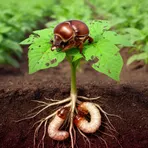
A large brown beetle that eats plant leaves and whose young eat roots
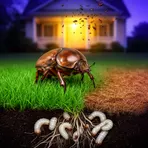
A large beetle that appears in late spring whose larvae eat plant roots and can damage lawns

A large brown beetle that appears in late spring and whose young eat plant roots

A large brown beetle that appears in late spring and whose larvae eat grass roots
Surface Forms
Morphology
melolonthid + beetle
The noun phrase is compositionally built from an adjective denoting membership in the family Melolonthidae + the noun 'beetle', so its meaning is simply 'a beetle of the Melolonthidae family'. Although 'melolonthid' is a technical term and may be unknown to learners, if a B1 learner knows the constituent words they can transparently infer it denotes a specific type of beetle; this follows a common cross-linguistic taxonomic modifier + noun pattern.
Etymology
Melolonthid beetle may come from the old Greek word melolontha, a word people used for the big brown beetles that come out in spring. Because it points to these familiar 'May beetles' or 'cockchafers', the name now means that whole group of related beetles.